คำนวณ Pressure Drop ระบบ Rental Blower — แจก Budget ตั้งแต่ Outlet Skid ถึง Point of Use
- วิธีจัดสรร total ΔP budget (0.3–0.5 bar) ให้แต่ละ component ตั้งแต่ outlet skid ถึง point of use — ด้วย budget table พร้อมใช้
- Worksheet คำนวณ pressure drop สำหรับ rental installation จริง: ท่อ inlet flexible, skid internal piping, check valve, ท่อ discharge flexible, distribution header, drop leg
- วิธีระบุ supply pressure ที่ถูกต้องในใบขอเสนอราคา AERZEN เพื่อให้ได้ model และ operating point ที่เหมาะสมกับ site piping จริง
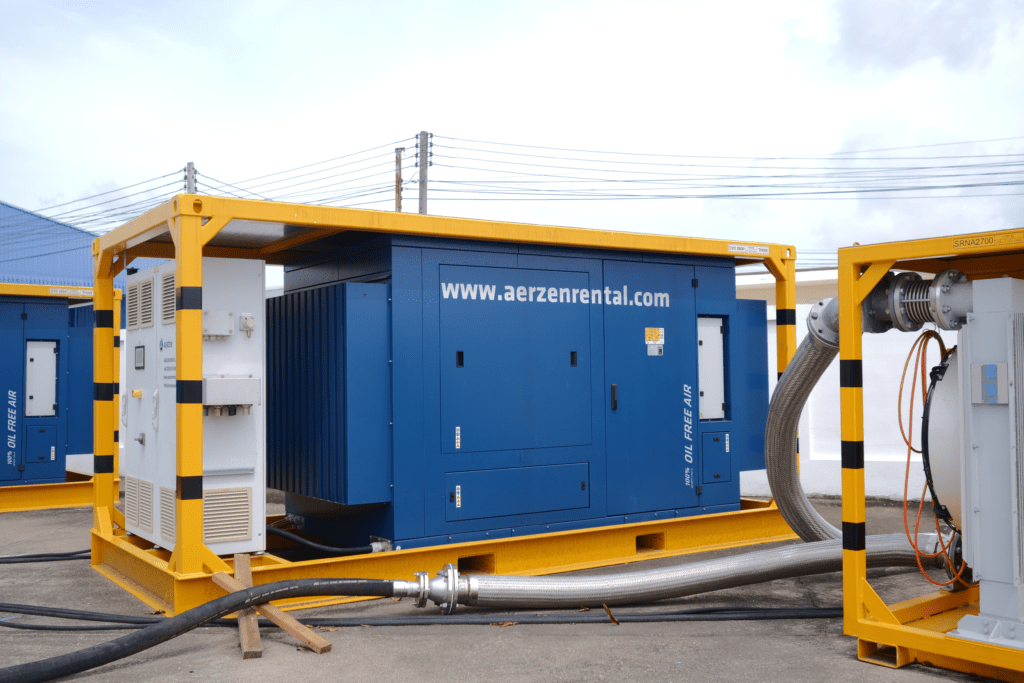
Rental blower installation มี component ที่ถาวร installation ไม่มี — flexible inlet hose, flexible discharge hose, และ quick-release connections — แต่ละชิ้นกิน ΔP จากงบประมาณที่มีจำกัด การจัดสรร budget อย่างเป็นระบบโดยแบ่ง 0.3–0.5 bar ให้ 6 zone ตั้งแต่ skid outlet ถึง point of use ทำให้ระบุ supply pressure ที่ถูกต้องได้ก่อนสั่งเช่า และป้องกันปัญหา under-pressure ที่ process หลังติดตั้ง
ทำไม Rental Installation ต้องคิด ΔP ต่างจาก Permanent Install
AERZEN ออกแบบ blower และ compressor มาตั้งแต่ปี 1864 ประสบการณ์กว่า 160 ปีสอนว่าความผิดพลาดที่พบบ่อยที่สุดในการติดตั้ง rental ไม่ใช่การเลือก model ผิด แต่คือ การระบุ supply pressure โดยไม่นับรวม pressure drop ของ piping ที่ customer จัดหาเอง
ใน permanent installation วิศวกรออกแบบท่อ piping ทั้งระบบพร้อมกัน กำหนด pipe diameter, ความยาว, จำนวน fitting ล่วงหน้า และ size blower โดยรู้ค่า ΔP ทั้งหมดก่อน
ใน rental installation มี 3 ปัจจัยที่แตกต่างออกไป:
- Piping ที่มีอยู่แล้ว — customer มักเชื่อม blower skid เข้ากับท่อที่ออกแบบสำหรับ compressor รุ่นเดิม ซึ่งอาจมีขนาดหรือ layout ต่างกัน
- Flexible connection ทั้งสองด้าน — rental skid เชื่อมกับ site piping ผ่าน flexible hose (ไม่ใช่ flanged hard-pipe) ซึ่งสร้าง ΔP เพิ่มเติมที่ต้องนับ
- ตำแหน่ง skid ที่ยืดหยุ่น — skid อาจวางห่างจาก distribution header มากกว่าที่คาด ทำให้ hose ยาวขึ้นและ ΔP เพิ่มขึ้น
บทความนี้มุ่งเน้น rental-specific budget allocation — การแบ่งงบประมาณ ΔP ให้แต่ละ zone ของระบบ ซึ่งแตกต่างจาก คู่มือออกแบบและคำนวณขนาด Blower สำหรับโรงงาน () ที่ครอบคลุมการ sizing equipment และการเลือก model โดยรวม
กำหนด Total ΔP Budget ก่อนแบ่ง
ก่อนจะแบ่ง budget ให้แต่ละ component ต้องรู้ว่ามี budget ทั้งหมดเท่าไร สูตรพื้นฐาน:
ΔP_budget_total = P_blower_outlet − P_process_minimum
โดย P_process_minimum คือความดันต่ำที่สุดที่ point of use ยังทำงานได้ เช่น:
- Aeration diffuser (wastewater): 0.35–0.55 bar(g) เหนือ water submergence depth
- Pneumatic conveying (dilute phase): 0.4–0.8 bar(g) ขึ้นกับ pickup velocity และ pipe length
- F&B process air: 0.5–0.7 bar(g) สำหรับ mixing หรือ agitation
- Instrument air / utility: 0.5–0.7 bar(g)
ค่า ΔP budget ที่ใช้งานได้จริงสำหรับ rental blower ในช่วง 0.5–1.0 bar(g) operating pressure คือ 0.30–0.50 bar การตั้ง budget ต่ำกว่า 0.30 bar มักเป็นไปไม่ได้จริงเมื่อรวม flexible connections และ site piping ทั้งหมด ส่วน budget เกิน 0.50 bar หมายถึงต้องเลือก supply pressure สูงขึ้นหรือ upsize piping
สำหรับ blower ที่ทำงานในช่วง 0.8–1.5 bar(g) (เช่น BVS screw blower) total budget อาจยืดได้ถึง 0.6 bar โดยยังอยู่ใน 40% ของ pressure rise ซึ่งยอมรับได้ตามแนวทาง CAGI (Compressed Air & Gas Institute) สำหรับ distribution system efficiency
Budget Allocation Table — Component by Component
ตารางด้านล่างแสดง reference allocation สำหรับ rental blower installation ทั่วไป ค่าทุกช่วงมาจากข้อมูลจริงของการติดตั้ง AERZEN และแนวทาง Compressed Air Best Practices Magazine สำหรับ industrial blower systems
| Zone / Component | ΔP Budget (bar) | % ของ Total Budget | ตัวแปรหลักที่กระทบ | ระดับความเสี่ยง |
|---|---|---|---|---|
| Inlet flexible hose + ducting | 0.010–0.040 | 3–10% | ความยาว, bore size, จำนวนข้องอ | ต่ำ |
| Inlet filter / silencer (ถ้ามี) | 0.010–0.030 | 3–8% | ขนาด media, flow velocity, dirty factor | ต่ำ |
| Skid internal piping + isolation valve | 0.015–0.040 | 5–10% | layout การวางท่อใน skid, valve type | ต่ำ — ค่าคงที่ตาม skid spec |
| Outlet check valve | 0.020–0.040 | 5–10% | valve type (swing vs. lift), bore matching | กลาง |
| Outlet flexible discharge hose | 0.010–0.040 | 3–10% | bore size, ความยาว, flow velocity | กลาง — มักถูกมองข้าม |
| Site distribution header | 0.030–0.100 | 8–25% | ความยาวท่อ, ขนาดท่อ, จำนวน fittings | สูง — ตัวแปรสูงสุด |
| Header tee + branch fitting | 0.005–0.030 | 1–8% | flow split ratio, tee geometry | กลาง |
| Drop leg ถึง point of use | 0.020–0.080 | 5–20% | ความยาว, เส้นผ่าศูนย์กลาง, elevation change | สูง — site-specific |
| TOTAL BUDGET (เป้าหมาย) | 0.30–0.50 bar | 100% | กรณีเกิน 0.50 bar → upsize ท่อ หรือเพิ่ม supply pressure | |
ใช้ค่ากลาง (midpoint) เป็นจุดเริ่มต้น จากนั้นปรับตาม site conditions จริง หาก zone ใดมีความไม่แน่นอนสูง (เช่น ยังไม่รู้ความยาวท่อแน่ชัด) ให้ใช้ค่าสูงสุดของช่วง (conservative) เพื่อให้มี margin เพียงพอ
Inlet Side: Flexible Hose และ Ducting
Inlet side ของ rental blower มี 2 component หลักที่สร้าง pressure drop:
1. Flexible Inlet Hose / Ducting
Flexible inlet hose (หรือ canvas duct สำหรับ blower ชนิด positive displacement) ทำหน้าที่สองอย่าง: ลด vibration transmission และรองรับการจัด alignment ที่ไม่สมบูรณ์แบบระหว่าง skid กับ air source
ค่า ΔP ของ inlet hose คำนวณได้จาก Darcy-Weisbach เช่นเดียวกับท่อทั่วไป แต่ต้องคำนึงถึง friction factor ที่สูงกว่าท่อเหล็ก เนื่องจาก corrugated bore:
- Smooth bore silicone hose:
f ≈ 0.020–0.025(ใกล้เคียงท่อเรียบ) - Corrugated rubber duct:
f ≈ 0.035–0.055(roughness สูงกว่า) - Canvas duct (สำหรับ blower large diameter):
f ≈ 0.040–0.060
AERZEN Delta Hybrid Screw Blower (D-class series) มา standard พร้อม smooth-bore inlet adapter flanged connection ΔP ของ inlet side จึงขึ้นกับ hose ที่ customer จัดหาเชื่อมต่อ ทีมวิศวกร AERZEN แนะนำ bore ≥ nominal inlet DN ของ blower (ห้ามลดขนาด) และความยาวไม่เกิน 2× inlet DN (m) เพื่อให้ ΔP อยู่ใน budget 0.02 bar
2. Inlet Silencer / Filter ที่ติดตั้งนอก Skid
บาง installation เพิ่ม external inlet filter housing หรือ silencer ก่อน blower เพื่อลด noise หรือ dust content ΔP ของ component เหล่านี้:
- Inlet filter (coarse, G4 class): 0.005–0.015 bar (clean) → สูงสุด 0.040 bar (dirty — เปลี่ยน media)
- Inlet silencer (absorption type): 0.010–0.025 bar ที่ rated flow
- Combined filter-silencer unit: 0.015–0.040 bar (clean)
สิ่งที่ควรระวัง: inlet-side ΔP เพิ่มขึ้นโดยตรงกับ square ของ flow velocity หาก flow เพิ่มขึ้น 20% ΔP เพิ่มขึ้น ~44% ดังนั้นถ้า install ใกล้ rated capacity ควร size inlet component ด้วย flow สูงกว่า rated 15–20% เพื่อเผื่อ margin
Skid Internal Piping และ Check Valve
Component ภายใน skid เป็นส่วนที่ค่า ΔP ค่อนข้างคงที่และทราบล่วงหน้า เนื่องจาก AERZEN ระบุค่านี้ใน technical datasheet ของแต่ละ rental package ผู้ใช้ไม่ต้องคำนวณเอง แต่ควรทราบว่ามาจากอะไร:
| Component ภายใน Skid | ΔP ที่ Rated Flow (bar) | หมายเหตุ |
|---|---|---|
| Outlet isolation valve (ball/gate) | 0.003–0.008 | เมื่อเปิดเต็ม; ห้ามใช้เป็น control valve |
| Check valve (non-return) — swing type | 0.020–0.040 | ป้องกัน back-flow; สูงขึ้นถ้า velocity สูงมาก |
| Outlet silencer / pulsation damper | 0.010–0.030 | มีใน DVO และ BVO series เป็น standard |
| Pressure gauge connection (tapping) | <0.001 | Negligible; บอก actual outlet pressure |
| Internal pipe runs (elbow + connector) | 0.005–0.015 | ขึ้นกับ skid layout ของแต่ละ series |
| รวม Skid Internal ΔP | 0.038–0.093 bar | ดูค่าจริงใน Rental Technical Datasheet |
“ค่า ΔP ภายใน skid ไม่ใช่ตัวแปรที่ผู้ใช้ต้องกังวล — AERZEN ระบุค่านี้ใน datasheet และรับผิดชอบว่า skid จะทำงานตาม spec ในช่วง flow ที่ตกลง สิ่งที่วิศวกรต้องออกแบบเองคือ site piping ตั้งแต่ outlet flanged connection ออกไป”
— แนวทาง AERZEN Application Engineering สำหรับ Rental Installation Planning
Check Valve: จุดที่มักประเมิน ΔP ต่ำกว่าความเป็นจริง
Check valve เป็น component ที่มักถูกมองข้ามในการคำนวณ budget เนื่องจากดูเป็น “fitting เล็กๆ” แต่ swing check valve ขนาด DN150 ที่ flow 3,000 m³/h สร้าง ΔP ได้ถึง 0.035 bar ที่ K-factor ≈ 2.0 ซึ่งเทียบเท่า pipe straight run ยาวกว่า 100D
สำหรับ rental blower ที่มี check valve เป็น standard component ค่านี้รวมอยู่ใน skid ΔP แล้ว แต่ถ้ามีการเพิ่ม check valve ที่ site piping (เช่น parallel blower configuration) ต้องนับแยกต่างหาก
Outlet Side: Discharge Hose และ Site Header
Outlet side เป็น zone ที่มีความผันแปรสูงที่สุด เพราะขึ้นกับ site conditions ที่ customer จัดหา มี 4 sub-zone:
1. Outlet Flexible Discharge Hose (Skid → Site Pipe Flange)
ความยาวปกติ 3–6 เมตร ทำจาก reinforced rubber หรือ PTFE-lined สำหรับ oil-free air ΔP ตัวอย่าง:
- DN150, ยาว 4 m, flow 3,000 m³/h: ΔP ≈ 0.012–0.018 bar (smooth bore silicone)
- DN125, ยาว 4 m, flow 3,000 m³/h: ΔP ≈ 0.035–0.055 bar (velocity สูงขึ้น)
- DN100, ยาว 4 m, flow 3,000 m³/h: ΔP ≈ 0.090–0.140 bar (เกิน budget — ต้อง upsize)
การใช้ discharge hose ขนาดเล็กกว่า outlet flange ของ blower (เช่น ใช้ hose DN100 กับ blower outlet DN150) เป็นข้อผิดพลาดที่พบบ่อยในการติดตั้ง rental ΔP จะสูงขึ้น 3–6 เท่า และ turbulence เพิ่มขึ้นมากจนส่งผลต่อ noise และ fatigue ของ connection fitting
2. Site Distribution Header
นี่คือ zone ที่ใช้ budget มากที่สุด (8–25% ของ total ΔP) การคำนวณใช้ Darcy-Weisbach เต็มรูปแบบ:
ΔP_header = f × (L_equiv / D) × (ρ_compressed × V²) / 2
โดย L_equiv = L_straight + Σ(K_fitting × D) สำหรับ fittings ทั้งหมดในแนว header
ค่า equivalent length (L/D) ของ fitting ที่พบบ่อยใน industrial header (อ้างอิง Crane Technical Paper 410):
- Elbow 90° long-radius: 16D
- Elbow 90° standard: 30D
- Tee flow-through run: 20D
- Tee flow-through branch: 60D
- Ball valve (fully open): 3D
- Butterfly valve (fully open): 40D
3. Header Tee + Branch
ค่า ΔP ที่ tee ขึ้นกับ flow split ratio ถ้า flow ส่วนใหญ่ไปในทิศตรง (flow-through run) ΔP ≈ 0.005–0.015 bar แต่ถ้า flow เลี้ยวผ่าน branch (flow-through branch) ΔP อาจสูงถึง 0.025–0.040 bar
4. Drop Leg ถึง Point of Use
Drop leg ที่ลงจาก header ถึง equipment นับรวม:
- Vertical pipe run (positive: ลงมา — ΔP ลดลง; negative: ขึ้น — ΔP เพิ่มขึ้น สำหรับ blower pressure range ≤ 0.5 bar elevation 1 m = ~0.01 bar เพิ่ม)
- Elbow ที่เปลี่ยนทิศ
- Regulator / control valve ถ้ามี
- Final flexible connection ถึง diffuser หรือ equipment inlet
Worksheet คำนวณ — กรอกข้อมูลเพื่อระบุ Supply Pressure
| Zone | รายละเอียด Site ของคุณ | Reference ΔP (bar) | ΔP ที่คำนวณ/ประเมิน (bar) |
|---|---|---|---|
| A — Inlet flexible hose | Length: ___ m, DN: ___ | 0.010–0.040 | กรอกค่า |
| B — Inlet filter/silencer | ชนิด: ___, ขนาด: ___ | 0.010–0.030 | กรอกค่า |
| C — Skid internal | ดูจาก AERZEN Rental Datasheet | 0.038–0.093 | ดู datasheet |
| D — Outlet discharge hose | Length: ___ m, DN: ___ | 0.010–0.040 | กรอกค่า |
| E — Distribution header | Length: ___ m, DN: ___, fittings: ___ | 0.030–0.100 | คำนวณ D-W |
| F — Header tee + branch | จำนวน tee: ___, flow split: ___ | 0.005–0.030 | กรอกค่า |
| G — Drop leg ถึง point of use | Length: ___ m, elevation: ± ___ m | 0.020–0.080 | กรอกค่า |
| H — Safety margin (5–10%) | ΔP A+B+C+D+E+F+G × 0.08 | 0.020–0.050 | คำนวณ 8% |
| Total ΔP = Σ (A ถึง H) | เป้าหมาย ≤ 0.50 bar | _____ bar | |
| Supply Pressure ที่แจ้ง AERZEN = P_process_min + Total ΔP | _____ bar(g) | ||
ถ้ายังไม่มีข้อมูลท่อที่ชัดเจน ให้ใช้ค่าสูงสุดของช่วง reference ΔP สำหรับทุก zone เพื่อให้ได้ conservative estimate — จากนั้นเมื่อมีข้อมูลจริงค่อยปรับลง การระบุ supply pressure ต่ำเกินไปทำให้ blower ทำงานไม่ถึง operating point ที่ต้องการ และแก้ไขภายหลังยากกว่าการ spec สูงไว้ก่อน
กรณีศึกษา: โรงงาน F&B EEC — Budget Allocation จริง
อุตสาหกรรมอาหารและเครื่องดื่ม — Eastern Seaboard
Requirement: Process air สำหรับ mixing และ agitation ใน production hall ขนาด 3,500 m² ต้องการ flow 4,200 Nm³/h ที่ minimum pressure 0.65 bar(g) ที่ diffuser inlet
Nm³/h Required
bar(g) P_process_min
bar Total ΔP Budget Used
Site piping ที่มีอยู่: DN200 carbon steel header ยาว 65 m จาก utility room ถึง production ผ่าน 6× elbow 90° standard + 3× tee สำหรับ 3 drop legs + drop leg แต่ละสาย DN150 ยาว 8 m
Budget Allocation ที่ประเมิน:
- A — Inlet flexible hose DN200, 3 m: 0.008 bar
- B — ไม่มี external filter: 0.000 bar
- C — Skid internal (AERZEN Delta Hybrid datasheet): 0.055 bar
- D — Outlet discharge hose DN200, 4 m: 0.010 bar
- E — Header DN200, 65 m + 6 elbows (30D) + 3 tee run (20D) = 65 + 36 + 12 = 113 m equiv: 0.085 bar
- F — Tee branch × 3 (60D each) = 3 × 60 × 0.2 m = 36 m equiv: 0.027 bar
- G — Drop leg DN150, 8 m × 3 (ใช้ค่า worst case 1 สาย): 0.065 bar
- H — Safety margin 8%: 0.020 bar
Total ΔP: 0.270 bar → ยังต่ำกว่า 0.30 bar budget minimum
ผลลัพธ์: ต้องการ supply pressure = 0.65 + 0.27 = 0.92 bar(g) ที่ blower outlet ทีมวิศวกร AERZEN แนะนำ BVS series ที่ P_outlet 1.0 bar(g) เพื่อมี operating margin 8% ซึ่งรองรับ fouling และ degradation ในอนาคต
กรณีศึกษานี้เป็น illustrative scenario อิงจาก typical EEC installation parameters ข้อมูลลูกค้าทั้งหมดได้รับการ anonymize และ generalize ตัวเลขใช้สำหรับการศึกษาเท่านั้น
วิธีระบุ Supply Pressure ให้ AERZEN ในใบขอเสนอราคา
เมื่อกรอก worksheet เสร็จแล้ว ขั้นตอนต่อไปคือการแปลงค่าที่ได้เป็นข้อมูลสำหรับใบขอเสนอราคา ทีมวิศวกร AERZEN จะใช้ข้อมูลนี้ในการ:
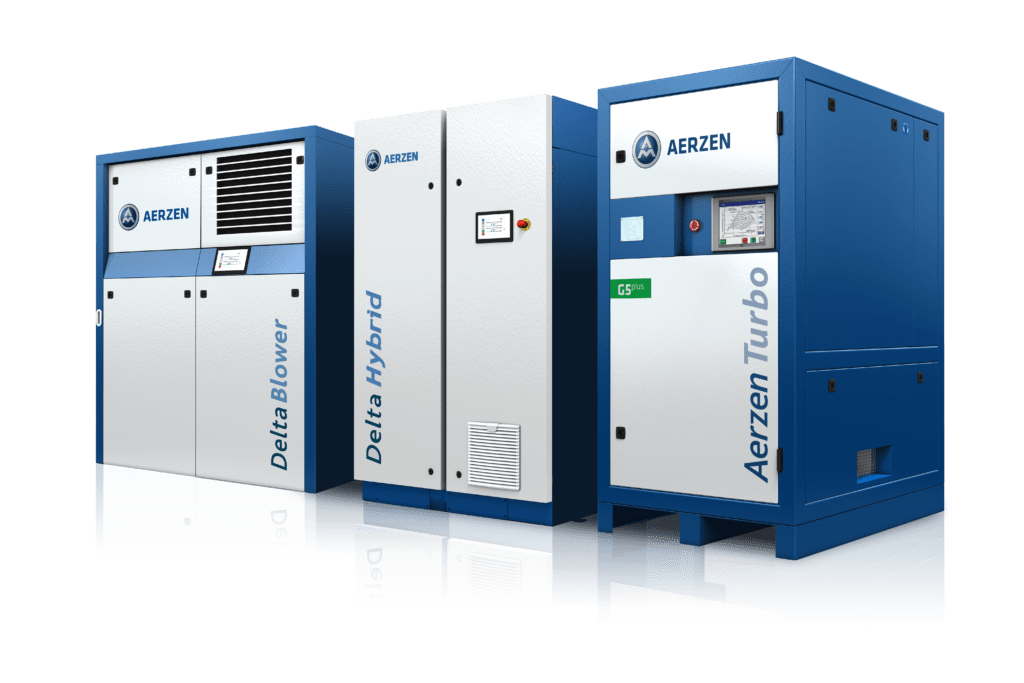
- เลือก model (BVO, BVS, Delta Hybrid, TVO, AT) ที่มี operating range ครอบคลุม supply pressure ที่ต้องการ
- กำหนด operating point บน P-Q curve เพื่อให้แน่ใจว่า flow rate ตรงตามความต้องการที่ supply pressure จริง
- ระบุ motor specification และ control mode ที่เหมาะสม
- แนะนำ safety valve setting เพื่อป้องกัน over-pressure
ข้อมูลที่ควรระบุในใบขอเสนอราคา:
- Flow rate ที่ต้องการ — ระบุเป็น Nm³/h (ที่ 0°C, 1.013 bar abs) หรือ actual m³/h พร้อมระบุอุณหภูมิและความดัน reference
- P_process_min (bar gauge) — ความดันต่ำที่สุดที่ point of use ยอมรับได้
- Total ΔP site piping (bar) — ค่าจาก worksheet รวม safety margin แล้ว
- Supply pressure ที่ต้องการที่ blower outlet — = P_process_min + ΔP_total
- ระยะทางจาก skid location ถึง header connection — เพื่อ verify discharge hose budget
- ชนิด application — F&B / wastewater / conveying เพื่อ spec oil-free class ที่เหมาะสม (ISO 8573-1 Class 0 สำหรับ F&B โดยตรง)
ภายใต้ Subscription Plan ทีมวิศวกร AERZEN ลงพื้นที่ทำ site survey เพื่อวัด pressure profile จริงก่อนส่ง equipment — ไม่ต้องประมาณเอง AERZEN รับผิดชอบว่า supply pressure ที่ blower outlet จะพอดีกับ process requirement จริงตลอดระยะสัญญา สอดคล้องกับ แนวทางการออกแบบระบบ blower แบบครบวงจร
สำหรับการเช่าระยะสั้น (emergency หรือ planned maintenance) ทีมสามารถ mobilize ภายใน 24 ชั่วโมงพร้อม preliminary calculation ที่อิงจากข้อมูลที่ส่งมา — ติดต่อ:
ขอ Pressure Drop Budget Analysis
ส่งข้อมูล site piping ให้ทีมวิศวกร AERZEN คำนวณ supply pressure ที่ถูกต้องก่อนสั่งเช่า — ฟรี ไม่มีข้อผูกมัด
Rent a solution. Expect performance.
Pressure drop budget สำหรับ rental blower ควรกำหนดที่เท่าไร
สำหรับ blower ที่ working pressure 0.5–1.0 bar(g) ค่า total pressure drop budget ที่ยอมรับได้คือ 0.30–0.50 bar ซึ่งคือ 30–50% ของ pressure rise ทั้งหมด ตามแนวทาง CAGI สำหรับ distribution system efficiency การยอมให้ site piping กิน ΔP มากกว่า 50% ของ pressure rise หมายความว่าต้อง upsize piping หรือเลือก blower ที่มี working pressure สูงขึ้น ซึ่งกระทบ energy consumption ทั้งระบบ
Flexible discharge hose สำคัญแค่ไหนต่อ pressure drop ทั้งระบบ
Flexible discharge hose ที่ bore ถูกต้อง (≥ nominal outlet DN ของ blower) มีผล ΔP เพียง 0.010–0.025 bar ซึ่งน้อยมาก อย่างไรก็ตาม hose ที่ bore เล็กกว่า outlet flanged หรือมีการพับงอสร้าง local loss เพิ่มสูงได้ถึง 0.10+ bar ดังนั้น การเลือก bore และตรวจสอบ routing ของ hose เป็นขั้นตอนที่สำคัญที่สุดในการติดตั้ง rental ที่มักถูกมองข้าม
ต้องแจ้งข้อมูลอะไรให้ AERZEN เพื่อขอ supply pressure ที่ถูกต้อง
แจ้ง 6 ข้อ: (1) flow rate (Nm³/h), (2) minimum pressure ที่ point of use (bar gauge), (3) ความยาวโดยประมาณของ site piping จาก blower location ถึง end-use, (4) ขนาดท่อ (DN) ที่มีอยู่, (5) จำนวน fittings หลัก (elbow, tee), (6) ประเภท application (F&B / wastewater / conveying) ทีมวิศวกร AERZEN จะคำนวณ supply pressure ที่เหมาะสมและแนะนำ model ที่รองรับโดยไม่คิดค่าใช้จ่าย
Check valve ใน skid ต่างจาก check valve ที่ต้องติดตั้งเองในระบบ parallel blower อย่างไร
Check valve ใน AERZEN rental skid เป็น standard component ที่ออกแบบมาสำหรับ back-flow protection ของ blower ตัวนั้น ΔP รวมอยู่ใน skid datasheet แล้ว สำหรับ parallel blower configuration ที่ต้องรวม discharge เข้า common header ต้องติดตั้ง check valve เพิ่มที่แต่ละ discharge branch ก่อนเข้า header — ΔP ของ check valve เพิ่มเติมนี้ต้องนับแยกต่างหากในการคำนวณ site piping
AERZEN BVO กับ BVS ต่างกันอย่างไรในแง่ pressure drop ของ skid
BVO (positive displacement blower) และ BVS (screw blower) ทั้งสองมี outlet check valve, isolation valve, และ outlet silencer เป็น standard ΔP ภายใน skid จึงอยู่ในช่วง 0.038–0.093 bar เหมือนกัน ความแตกต่างที่สำคัญกว่าคือ pressure range: BVO เหมาะกับ 0.3–0.9 bar(g), BVS เหมาะกับ 0.4–1.5 bar(g) การเลือกระหว่างสองรุ่นจึงขึ้นกับ supply pressure ที่ต้องการมากกว่า skid ΔP สำหรับรายละเอียดการเลือก model ดู คู่มือออกแบบและคำนวณขนาด Blower
Subscription Plan ของ AERZEN รวมการวัด pressure drop จริงหลังติดตั้งด้วยไหม
รวม — ภายใต้ Subscription Plan ทีมวิศวกร AERZEN ทำ commissioned pressure survey หลังติดตั้งเพื่อวัด ΔP จริงแต่ละ zone เปรียบเทียบกับค่าออกแบบ หากพบว่า actual ΔP สูงกว่าที่คำนวณ ≥ 15% ทีมจะแนะนำมาตรการแก้ไข เช่น ขยาย bore หรือ optimize routing โดยไม่มีค่าใช้จ่ายเพิ่มเติม
บทความที่เกี่ยวข้อง
- คู่มือออกแบบและคำนวณขนาด Blower & Compressor สำหรับโรงงาน () — ครอบคลุม equipment selection, P-Q diagram และ system curve
- CFM & Pressure Sizing Guide — วิธีแปลง Flow Requirement เป็น Blower Specification
- P-Q Diagram Reading — อ่านกราฟ Blower และ System Curve ให้ออก
- Request a Quote — ขอใบเสนอราคา Rental Blower
Last technical review: 2026-06-02 •
ตรวจสอบข้อมูลเทคนิคครั้งล่าสุด: 2 มิถุนายน 2026 •
อ้างอิง: Crane Technical Paper 410 (TP-410), CAGI Blower Distribution Guidelines,
ISO 8573-1:2010 Compressed Air — Contaminants and Purity Classes,
AERZEN Rental Technical Datasheets (BVO / BVS / Delta Hybrid series)

✍️ เกี่ยวกับผู้เขียน
ภราดร วรรณสังข์ (Paradorn Wannasung)
Marketing Communication Specialist · นิเทศศาสตรมหาบัณฑิต (การสื่อสารการตลาดและแบรนด์)
ภราดร (Paradorn) เป็นผู้ดูแลด้านการสื่อสารการตลาดของ AERZEN Rental Thailand จบนิเทศศาสตรมหาบัณฑิต (การสื่อสารการตลาดและแบรนด์) เชี่ยวชาญด้านอุตสาหกรรม B2B ในประเทศไทย มีประสบการณ์การสร้างแบรนด์และคอนเทนต์ในกลุ่มอุตสาหกรรมของไทย
ติดต่อ: pwa@aerzenrental.com · LinkedIn