ตามที่ AERZEN ออกแบบมาตั้งแต่ปี 1864 ระบบ blower ที่ดีไม่ได้ขึ้นอยู่กับตัวเครื่องเพียงอย่างเดียว แต่ขึ้นอยู่กับระบบ piping ที่รองรับแรงดันได้พอดีตลอดอายุการใช้งาน
เมื่อ plant engineer ออกแบบระบบ compressed air หรือ blower ใหม่ คำถามแรกที่ควรถามไม่ใช่ “blower รุ่นไหนดี” แต่ควรถามว่า “pressure drop budget ของระบบ piping เราคืออะไร และเรามี design margin เพียงพอไหม”
การข้ามขั้นตอนนี้ทำให้เกิดปัญหาที่พบบ่อย ได้แก่ blower ทำงานนอก operating envelope, flow ไม่ถึงจุดใช้งาน, และ motor overloaded ก่อนครบ warranty period
บทความนี้จะอธิบาย pressure drop budget อย่างเป็นระบบ รวมถึงวิธีกันช่องว่าง design margin ให้เพียงพอรองรับ fouling, fitting loss, และ future expansion
Pressure Drop Budget คืออะไร
Pressure drop budget คือการกำหนดว่าระบบ piping ทั้งหมด (ท่อตรง, ข้องอ, valve, filter, silencer, flexible joint) จะ “ใช้” แรงดันไปรวมกันเท่าไรจาก outlet ของ blower ไปถึงจุดใช้งาน
แนวคิดเดียวกับงบประมาณเงิน คุณมีแรงดันจาก blower จำนวนหนึ่ง และต้องแบ่งให้ทุก component ใช้ ส่วนที่เหลือต้องคงอยู่ที่ end-of-pipe ให้พอกับ process requirement
สูตรพื้นฐาน:
ΔP_system = ΔP_pipe_straight + ΔP_fittings + ΔP_filter + ΔP_silencer + ΔP_valve + ΔP_diffuserค่า ΔP_system ทั้งหมดต้องน้อยกว่า:
ΔP_budget = P_blower_outlet − P_process_minimum − Safety_marginถ้า ΔP_system เกิน budget หมายความว่า blower ต้องทำงานหนักขึ้น หรือ process ได้แรงดันน้อยกว่าที่ออกแบบ
วิธีคำนวณ Pressure Drop ในท่อตรง (Darcy-Weisbach)
สมการ Darcy-Weisbach เป็นมาตรฐานอ้างอิงสำหรับการคำนวณ pressure drop ในท่อตรง:
ΔP = f × (L/D) × (ρ × v²/2)โดยที่:
- f = Darcy friction factor (dimensionless) — คำนวณจาก Moody chart หรือ Colebrook equation
- L = ความยาวท่อ (m)
- D = เส้นผ่าศูนย์กลางภายใน (m)
- ρ = ความหนาแน่นของอากาศ (kg/m³) — ที่อุณหภูมิและแรงดันใช้งาน
- v = ความเร็วอากาศในท่อ (m/s)
ตัวอย่างการคำนวณ:
ระบบ blower ส่ง flow = 3,000 Nm³/h ผ่านท่อ DN200 (ID = 202.7 mm) ที่แรงดัน 0.5 bar(g) อุณหภูมิ 40°C:
- ความหนาแน่นอากาศที่ 40°C, 1.5 bar(abs) ≈ 1.70 kg/m³
- Flow จริง (actual m³/s) = 3,000/3,600 × (1.013/1.513) × (313/273) ≈ 0.653 m³/s
- พื้นที่หน้าตัดท่อ = π/4 × (0.2027)² ≈ 0.0323 m²
- ความเร็วอากาศ v = 0.653/0.0323 ≈ 20.2 m/s
- สำหรับท่อเหล็ก (roughness ε = 0.046 mm), Re ≈ 4.7×10⁵ → f ≈ 0.016
- ΔP สำหรับท่อยาว 50 m = 0.016 × (50/0.2027) × (1.70 × 20.2²/2) ≈ 1,369 Pa ≈ 0.014 bar
หมายเหตุ: ตัวเลข v = 20.2 m/s อยู่ในช่วงที่ยอมรับได้ (แนะนำ 15-25 m/s สำหรับ blower discharge) — ถ้า v > 30 m/s ควรขยาย pipe diameter เพื่อลด ΔP และ noise
Equivalent Length Method สำหรับ Fitting Loss
แทนที่จะคำนวณ K-factor ของ fitting แต่ละชิ้น วิธี Equivalent Length แปลง fitting ให้เป็น “ความยาวท่อตรงสมมูล” แล้วรวมกับ L จริง
ตารางค่า L_eq มาตรฐาน (อ้างอิง Crane Technical Paper 410, TP-410 — verified 2026-05-08):
| Fitting | L_eq/D (Darcy) |
|---|---|
| 90° long-radius elbow | 16 |
| 90° standard elbow | 30 |
| 45° elbow | 16 |
| Gate valve (fully open) | 8 |
| Ball valve (fully open) | 3 |
| Globe valve (fully open) | 340 |
| Tee (flow through run) | 20 |
| Tee (flow through branch) | 60 |
| Sudden contraction (0.5 ratio) | 15 |
| Sudden expansion (0.5 ratio) | 30 |
การนำไปใช้:
ระบบมี fitting: 4× 90° elbow LD, 2× gate valve, 1× tee branch
L_eq รวม = (4×16 + 2×8 + 1×60) × D = (64 + 16 + 60) × 0.2027 = 140 × 0.2027 ≈ 28.4 m
L_total = L_straight + L_eq = 50 + 28.4 = 78.4 m
ΔP_revised = 0.014 × (78.4/50) ≈ 0.022 bar
ความแตกต่างระหว่าง 0.014 bar (ท่อตรงเท่านั้น) และ 0.022 bar (รวม fitting) คือ 57% — นี่คือเหตุผลที่การคำนวณแบบ simplified มักทำให้ blower sizing ผิดพลาด และ component ที่ถูกลืม (filter, silencer, check valve, diffuser) จะเพิ่ม ΔP_total จริงได้อีกหลายเท่าตัวในระบบ industrial จริง
Design Margin: ควรเผื่อเท่าไร
Design margin คือ buffer ที่เพิ่มบน top of ΔP_calculated เพื่อรองรับ:
- Fouling margin — ท่อสะสม scale หรือ corrosion ทำให้ roughness เพิ่ม (แนะนำ +10-15%)
- Measurement uncertainty — instrument error ในการวัด flow และ pressure (+5%)
- Future load growth — expansion capacity ที่วางแผนไว้ (+10-20%)
- Filter loading — filter element สะอาดมี ΔP ต่ำ แต่เมื่อถึง replacement point ΔP สูงขึ้น 2-3 เท่า (+100% of clean ΔP)
แนวปฏิบัติ AERZEN:
สำหรับระบบ industrial blower ทั่วไป design margin รวม = 25-35% บน top of ΔP_calculated
สำหรับระบบที่มี process-critical requirement (electronics, food-grade, ISO Class 0) แนะนำ 35-50% เพราะ filter element เปลี่ยนบ่อยและ ΔP across filter สูงกว่า
ตัวอย่าง (ท่อตรง 50m + fittings ข้างต้นเท่านั้น — ยังไม่รวม filter, silencer, check valve):
- ΔP_calculated = 0.022 bar
- Margin 30% = 0.007 bar
- ΔP_subtotal = 0.029 bar
หมายเหตุ: ค่า 0.029 bar ข้างต้นครอบคลุมเฉพาะท่อตรงและ fitting ในระบบ industrial จริงให้บวก ΔP ของ component เพิ่ม ได้แก่ inlet filter (20–50 mbar), outlet silencer (5–15 mbar), check valve (20–80 mbar) และ process component เช่น fine-bubble diffuser (180–220 mbar) — ทำให้ ΔP_design รวมทั้งระบบอยู่ในช่วง 0.10–0.40 bar ขึ้นกับ configuration ดู Section “Component ที่มักถูกลืมใน Pressure Drop Budget” ด้านล่าง
Blower ที่เลือกต้องสามารถ deliver rated flow ที่ back-pressure ครอบคลุม ΔP_design รวมทุก component ที่ outlet
Component ที่มักถูกลืมใน Pressure Drop Budget
1. Silencer / Attenuator
Silencer ที่ inlet และ outlet ของ blower มี ΔP ที่ผู้ออกแบบมักลืมนับ โดยทั่วไป:
- Inlet silencer: 3-8 mbar (clean condition)
- Outlet silencer: 5-15 mbar (clean condition)
- เมื่อ fouled: อาจสูงถึง 30-50 mbar
2. Flexible Connector / Expansion Joint
Flexible joint ที่ inlet/outlet ของ blower เพื่อรองรับ vibration มี ΔP น้อยมาก (< 2 mbar) แต่ถ้าติดตั้งผิดทิศทางหรือ bellows deformed จะสร้าง turbulence เพิ่ม ΔP ได้ถึง 10-20 mbar
3. Check Valve / Non-Return Valve
Check valve มี ΔP 20-80 mbar ขึ้นกับ type (swing, spring-loaded, wafer) และ flow velocity — ค่านี้มักถูกประเมินต่ำในขั้นตอน conceptual design
4. Flow Measurement Device (Orifice Plate / Venturi)
ถ้าระบบมี permanent flow meter type orifice plate ΔP สูงถึง 100-250 mbar — ควรพิจารณา Venturi หรือ V-cone ที่มี ΔP ต่ำกว่า
เคส AERZEN: ระบบ Wastewater Aeration ที่โรงงาน EEC (ตัวอย่างประกอบ)
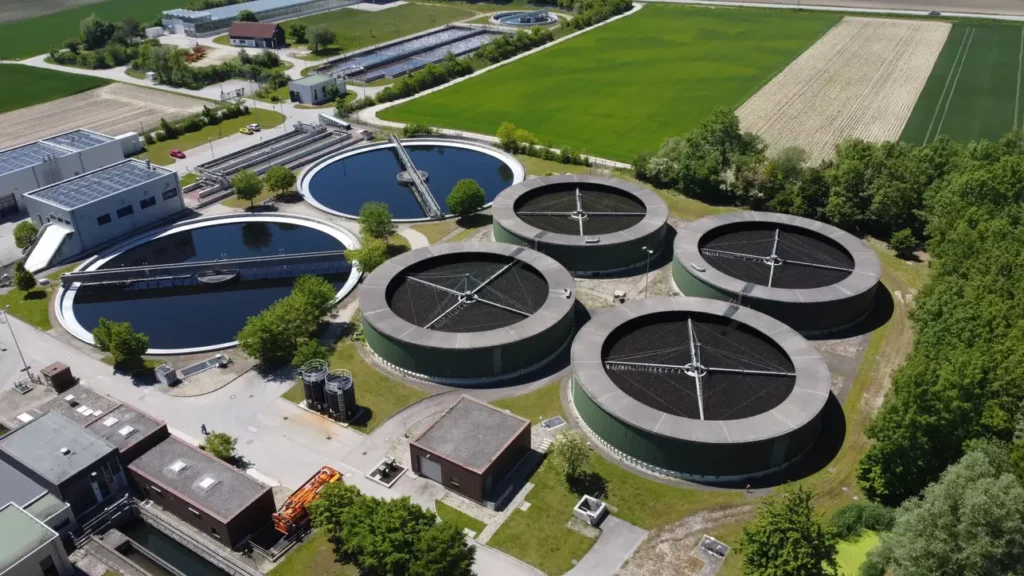
บริบท (anonymized): โรงงานในเขต EEC ติดตั้ง blower ใหม่สำหรับ aeration basin ความจุ 5,000 m³ ทีม engineering ทำ DP calculation เฉพาะท่อตรง ไม่นับ fitting และ diffuser loss
ปัญหาที่เกิด:
- ΔP จริงที่วัดได้สูงกว่า design 42%
- Flow ไปถึง basin น้อยกว่า spec 18%
- Motor current สูงกว่า rated 8% ต่อเนื่อง
แนวทางแก้ไขร่วมกับ AERZEN:
- Re-audit DP ทุก component — พบว่า diffuser pressure loss (หัว fine bubble diffuser ในน้ำ) ไม่ถูกนับรวม ค่านี้สูงถึง 180-220 mbar
- Re-size blower โดยใช้ design margin 35% รวม diffuser loss
- เพิ่ม globe valve เป็น ball valve ลด ΔP ที่ valve 280 mbar
ผลลัพธ์: Flow กลับมาครบ spec ภายใน 3 สัปดาห์หลัง modification motor current กลับมาอยู่ในช่วง rated
ความสัมพันธ์ระหว่าง Pressure Drop และ Energy Consumption
Pressure drop ไม่ใช่แค่เรื่อง flow — มันส่งผลโดยตรงต่อ energy consumption ของ blower
สำหรับ positive displacement blower (เช่น AERZEN BVS Delta Screw):
Power ∝ ΔP × Qถ้า ΔP เพิ่มขึ้น 20% (จาก fouling หรือ under-designed piping) power consumption เพิ่มขึ้นตามสัดส่วน
สำหรับ centrifugal-type (เช่น AERZEN TVO Turbo): ความสัมพันธ์ซับซ้อนกว่า เพราะมี operating curve — DP ที่สูงเกิน design อาจทำให้ machine surge ซึ่งเป็นสภาวะที่อันตราย
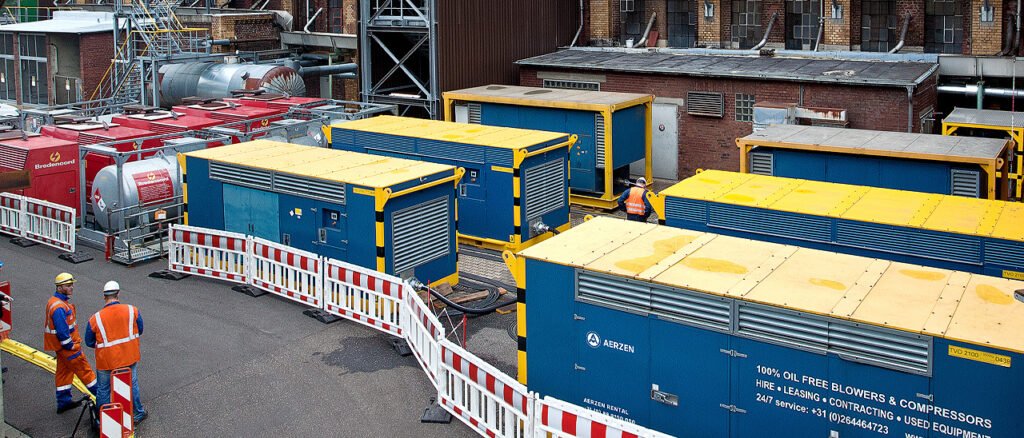
นัยสำคัญสำหรับ rental: ถ้า piping system ของคุณมี ΔP สูงกว่า spec เครื่อง rental จาก AERZEN ที่ได้รับมาอาจไม่ deliver flow ตามที่สั่งไว้ — เพราะ machine ถูก specify ตาม duty point ที่ระบุ การทำ DP audit ก่อน rental จึงเป็นขั้นตอนที่ทีม AERZEN แนะนำก่อนทุก project
Checklist สำหรับ Plant Engineer ก่อน Specify Blower
- [ ] คำนวณ ΔP ท่อตรงทุก segment ด้วย Darcy-Weisbach
- [ ] แปลง fitting ทุกชิ้นเป็น equivalent length และรวม L_total
- [ ] นับ ΔP across: filter, silencer (inlet+outlet), check valve, flow meter, control valve
- [ ] นับ static pressure ของ process (diffuser depth สำหรับ aeration, column height สำหรับ conveying)
- [ ] เพิ่ม design margin 25-35% (หรือ 35-50% สำหรับ critical process)
- [ ] Verify ว่า blower operating point อยู่บน performance curve ในช่วง stable operation (ไม่ใกล้ surge หรือ stonewall)
- [ ] ตรวจสอบว่า pipe velocity อยู่ใน range 15-25 m/s (discharge), 10-20 m/s (suction)
คำถามที่พบบ่อย (FAQ)
Q1: DP calculation ควรทำที่อุณหภูมิไหน — design temperature หรือ worst case?
ควรทำทั้งสองกรณี Design temperature ให้ nominal duty point; worst case (อุณหภูมิสูงสุดที่ inlet) ให้ verify ว่า blower ยัง deliver flow พอแม้ความหนาแน่นอากาศลดลง อุณหภูมิ inlet สูง 10°C ทำให้ density ลดลง ~3.3% ซึ่งส่งผลต่อ mass flow rate โดยตรง
Q2: ท่อ stainless steel กับท่อ carbon steel มี DP ต่างกันไหม?
ต่างกันเล็กน้อย เพราะ surface roughness ต่างกัน (SS ≈ 0.015 mm vs carbon steel ≈ 0.046 mm) ที่ Reynolds number สูง (turbulent flow) ความแตกต่างของ f จะน้อยกว่า 10% — ปัจจัยที่สำคัญกว่าคือ fitting count และ filter selection
Q3: ควรใช้ software ไหนในการทำ hydraulic calculation?
ระบบขนาดเล็กถึงกลาง (< 10 nodes): Excel ที่ implement Darcy-Weisbach + Colebrook เพียงพอ ระบบซับซ้อน (> 20 nodes, looped network): แนะนำ PIPE-FLO, AFT Arrow, หรือ Caesar II สำหรับ compressed air/gas โดยเฉพาะ AERZEN engineering team สามารถให้คำปรึกษาเบื้องต้นเกี่ยวกับ system design ได้
Q4: Pressure drop budget ควร review ใหม่เมื่อไร?
Review ควรทำทุกครั้งที่: (1) เพิ่มหรือเปลี่ยน process equipment ใน downstream (2) เพิ่ม branch ใหม่ในระบบ (3) ทำ major piping modification (4) ถึง planned maintenance interval ของ filter (แม้จะไม่ exchange ให้ measure ΔP across filter จริง)
Q5: ถ้า ΔP จริงสูงกว่า design ควรแก้ที่ blower หรือที่ piping?
ตอบตาม root cause ก่อน ถ้า ΔP เกิดจาก fouled filter → เปลี่ยน element ถ้าเกิดจาก piping design ผิด → แก้ piping (ขยาย diameter หรือลด fitting count) ถ้าเกิดจาก load growth → re-size blower การ “push” blower ด้วยการ increase speed เพื่อชดเชย system ΔP ที่สูงเกิน spec เป็น workaround ที่ทำลาย bearing life
Q6: Rental blower จาก AERZEN มา spec อะไรบ้างที่เกี่ยวกับ DP?
ทุกหน่วย rental จาก AERZEN มาพร้อม performance datasheet ที่ระบุ duty point (flow vs. differential pressure) และ max allowable inlet/outlet pressure ทีม engineering ของ AERZEN สามารถ review DP calculation ของคุณและ confirm ว่า unit ที่เลือกตรง duty point ก่อน delivery
ขั้นตอนถัดไป
Pressure drop budget ที่ออกแบบดีตั้งแต่ต้น คือการประกันว่า blower จะทำงานที่ duty point ที่ถูกต้อง ประหยัดพลังงาน และมีอายุการใช้งานยาวตามที่วางแผน
หากต้องการให้ทีม AERZEN ช่วย review system hydraulic calculation หรือ recommend unit ที่เหมาะกับ duty point ของระบบคุณ ติดต่อได้ที่:
AERZEN Rental Thailand
- โทร (ออฟฟิศ): 038-015-488
- สายด่วน 24/7: 098-323-2626
- อีเมล: thai@aerzenrental.com
- เว็บไซต์: www.aerzenrentalth.com
Rent a solution. Expect performance.
แหล่งอ้างอิง
- Crane Co. Flow of Fluids Through Valves, Fittings, and Pipe (Technical Paper No. 410). Crane Valve Group. Available at: https://www.flowoffluids.com/publications/tp-410.aspx (verified 2026-05-08)
- ISO 5167-1:2022 Measurement of fluid flow by means of pressure differential devices inserted in circular cross-section conduits running full — Part 1: General principles and requirements. Available at: https://www.iso.org/ (verified 2026-05-08)

✍️ เกี่ยวกับผู้เขียน
ภราดร วรรณสังข์ (Paradorn Wannasung)
Marketing Communication Specialist · นิเทศศาสตรมหาบัณฑิต (การสื่อสารการตลาดและแบรนด์)
ภราดร (Paradorn) เป็นผู้ดูแลด้านการสื่อสารการตลาดของ AERZEN Rental Thailand จบนิเทศศาสตรมหาบัณฑิต (การสื่อสารการตลาดและแบรนด์) เชี่ยวชาญด้านอุตสาหกรรม B2B ในประเทศไทย มีประสบการณ์การสร้างแบรนด์และคอนเทนต์ในกลุ่มอุตสาหกรรมของไทย
ติดต่อ: pwa@aerzenrental.com · LinkedIn
บทความที่เกี่ยวข้อง
เปลี่ยนโบลเวอร์เดิมเป็น AERZEN แบบ Drop-In: คุม Footprint, ท่อ และฐานเดิม
Drop-in replacement ...
อ่านต่อ →