อากาศอัด Class 0 ในกระบวนการ Reactive Dye Fixation และ Steaming
ทำไม Oil Trace เพียง 0.01 mg/m³ ทำลายการย้อมสีผ้าส่งออก
TL;DR — สาระสำคัญ 3 ข้อ
- น้ำมันในอากาศอัดแม้เพียง 0.01 mg/m³ (Class 1 upper limit) สร้าง hydrophobic film บน cellulose fiber ขัดขวาง covalent bond ของ reactive dye — Class 0 (<0.008 mg/m³ ตาม ISO 8573-2) คือมาตรฐานต่ำสุดที่ยอมรับได้ในโรงงาน reactive dyeing
- สภาพแวดล้อม high-humidity ของ jigger steamer และ continuous steamer สร้าง steam-condensate pathway ที่ดึง oil droplet กลับสู่ผ้าหากใช้ oil-lubricated compressor — ต้องออกแบบ point-of-use separator ให้ทนอุณหภูมิ ≥120°C
- OEKO-TEX Standard 100 Edition 2024 Annex 6 กำหนด mineral oil residue ≤ 0.5–1.0 mg/kg ในสิ่งทอ — โรงงานส่งออกต้อง document compressed air quality ใน Ecopassport chemical compliance file
AERZEN ออกแบบ oil-free compressed air system มาตั้งแต่ปี 1864 และในช่วงทศวรรษที่ผ่านมา ข้อมูลจากโรงงานสิ่งทอในเอเชียตะวันออกเฉียงใต้ชี้ให้เห็นปัญหาเดิมซ้ำแล้วซ้ำเล่า: การใช้ oil-lubricated compressor ร่วมกับ downstream filter ในกระบวนการ reactive dye fixation ไม่ได้ให้ความมั่นใจเพียงพอ เพราะกลไก hydrophobic contamination บน cellulose fiber เกิดขึ้นในระดับโมเลกุล — ต่ำกว่าระดับที่ Class 1 air quality ควบคุมได้ บทความนี้เจาะลึกเฉพาะกระบวนการ reactive dyeing และ steaming ซึ่งแตกต่างจากบทความ ภาพรวม Oil-Free Air สำหรับโรงงานสิ่งทอและ Dyeing ที่ครอบคลุม application map ทั้ง 5 จุดของโรงงาน
1. ปฏิกิริยาเคมีของ Reactive Dye Fixation และจุดเปราะบางต่อน้ำมัน
Reactive dye คือกลุ่มสีสังเคราะห์ที่ใช้กับเส้นใย cellulose (ฝ้าย, viscose, lyocell/Tencel) มากที่สุดในโลก โดยมีส่วนแบ่งตลาดสิ่งทอสีมากกว่า 50% ตาม ETAD Technical Guidance 2023 กลไกการ fixation เกิดขึ้นผ่านปฏิกิริยา nucleophilic substitution ระหว่าง reactive group ของ dye (โดยทั่วไปคือ monochlorotriazine, dichlorotriazine หรือ vinyl sulfone) กับ -OH group ของ cellulose polymer ใน alkaline condition (pH 10.5–11.5, อุณหภูมิ 60–90°C หรือ 95–102°C ในกรณี steaming fixation)
จุดเปราะบางเกิดขึ้นตรงนี้: เส้นใย cellulose ที่สะอาดจะให้ -OH group เข้าถึง reactive dye ในสารละลายได้อย่างอิสระ แต่เมื่อมี oil aerosol ใน compressed air ที่ใช้ในกระบวนการ — ไม่ว่าจะเป็น air agitation ใน dyeing bath, dye-jet nozzle หรือ instrument air สำหรับ control valve — น้ำมันสร้าง hydrophobic monolayer บนพื้นผิว fiber ขัดขวางการเข้าถึงของ dye anion
ผลกระทบที่พบในโรงงานมีสองระดับ:
- ระดับ batch quality: dye fixation rate ลดลง 3–8% ทำให้ colour depth (K/S value) ต่ำกว่า target — ต้องเพิ่ม dye concentration หรือ re-dye ซึ่งเพิ่ม chemical cost และ water consumption
- ระดับ compliance: mineral oil residue ตกค้างบน fabric อาจทำให้ fail OEKO-TEX Standard 100 Annex 6 และ Bluesign / Ecopassport audit — สูญเสีย export certification
2. สภาพแวดล้อม Steaming — High-Humidity Condensate Pathway
ใน process ส่วนใหญ่ reactive dye fixation แบบ steaming ทำให้ fabric ผ่านไอน้ำอิ่มตัว (saturated steam) ที่อุณหภูมิ 95–102°C เพื่อกระตุ้น covalent bond — กระบวนการนี้เรียกว่า thermofixation ด้วย steam ซึ่งนิยมใช้กับ reactive printing (screen print หรือ digital inkjet) และ exhaust dyeing บน jigger หรือ continuous steamer
อันตรายจากมุมมอง compressed air quality อยู่ที่ condensate pathway: เมื่อ steam zone สัมผัสกับ compressed air line ที่มีอุณหภูมิต่ำกว่า (ท่อ supply air ที่ไม่ได้ heating) เกิดการ condensation ทำให้น้ำซึมเข้า line ผ่าน leaky pneumatic seal หรือ union joint น้ำ condensate นี้จะ carry oil droplet (ถ้ามี) กลับสู่ dye nozzle หรือ fabric guide actuator
ใน jigger steamer
ที่ fabric entry zone
ISO 8573-1 Class 0
limit (Product Class I)
ปัจจัยที่ซับซ้อนกว่านั้นคือ high-humidity environment ทำให้ pressure dew point (PDP) ของ compressed air มีความสำคัญเพิ่มขึ้น ISO 8573-1 กำหนด water vapor class แยกออกจาก oil class แต่ในสภาพ steaming workshop ที่อุณหภูมิอากาศแวดล้อมอยู่ที่ 35–45°C (ไทยในฤดูร้อน) compressed air เส้น supply air ต้องผ่าน refrigerated air dryer ที่สามารถทำ PDP ได้ที่ 3°C หรือต่ำกว่า เพื่อป้องกัน re-condensation ในท่อ
— AERZEN Application Engineering Insight, based on Southeast Asia installation experience
3. Steam-Air Separation ที่ Jigger และ Continuous Steamer
Jigger steamer และ continuous steamer (เช่น Ager-type หรือ Universal Steamer ที่ใช้ใน continuous fabric processing) มีโครงสร้าง compressed air application ที่แตกต่างกัน:
3.1 Jigger Steamer
Jigger ใช้ compressed air ที่ pressure 4–6 bar สำหรับ:
- Fabric tension control: pneumatic brake actuator ป้องกัน fabric slack ระหว่าง reverse winding
- Cover plate actuation: pneumatic cylinder เปิด-ปิด steam cover เพื่อรักษา steam atmosphere
- Liquor circulation pump drive (ในบางรุ่น): ใช้ air-driven diaphragm pump
จุดเสี่ยงหลักของ jigger คือ pneumatic seal ที่ shaft ของ tension roll — seal เสื่อมสภาพเร็วในสภาพ humid heat และเมื่อ seal รั่ว steam จะเข้า compressed air line สร้าง back-flow ที่ air control valve ต้นน้ำ วิธีป้องกัน: ติดตั้ง point-of-use water separator (coalescing type) ที่ rated temperature ≥ 120°C ใกล้กับ jigger และ inspect seal interval ตาม PM schedule 1,000 ชั่วโมง
3.2 Continuous Steamer
Continuous steamer ประกอบด้วย inlet seal zone, main steam chamber, และ exit seal zone โดยที่ inlet และ exit มี steam-air interface ที่ต้องควบคุมด้วย compressed air ผ่าน steam lock (air seal) เพื่อป้องกัน steam leakage สู่ workshop
Steam lock ทำงานโดยส่ง compressed air ที่ overpressure เล็กน้อย (~0.05 bar above steam zone) ผ่าน nozzle array ที่ fabric edge — กระแส air นี้สัมผัสกับ dyed fabric โดยตรง ดังนั้น oil contamination ณ จุดนี้ส่งผลต่อ fabric โดยตรงที่สุด ไม่มี intermediate process step ที่จะล้างออกได้
4. OEKO-TEX Standard 100 และ Ecopassport — ข้อกำหนดสำหรับผ้าส่งออก
OEKO-TEX Standard 100 Edition 2024 (formerly Oeko-Tex Standard 100) เป็นมาตรฐานที่ผู้ซื้อสิ่งทอระดับ global รวมถึงห้างสรรพสินค้าในยุโรปและอเมริกา กำหนดให้ supplier ต้องรับรอง โดย Annex 6 ครอบคลุม chemical requirements บน finished article รวมถึงค่า mineral oil ตกค้าง:
| Product Class | รายละเอียด | Mineral Oil Limit (mg/kg fabric) | ระดับความเสี่ยงจาก Class 1 Air |
|---|---|---|---|
| Class I | Baby articles (0–3 ปี) — ผ้าอ้อม, ชุดเด็กทารก | ≤ 0.5 mg/kg (aliphatic + aromatic) | สูงมาก |
| Class II | Skin-contact articles — เสื้อ, กางเกง, ชุดชั้นใน | ≤ 1.0 mg/kg | สูง |
| Class III | Non-skin-contact articles — ผ้าม่าน, ผ้าปูที่นอน (outer layer) | ≤ 1.0 mg/kg | สูง |
| Class IV | Decoration materials — ผ้าตกแต่งบ้าน | ≤ 1.0 mg/kg | ปานกลาง |
Ecopassport by OEKO-TEX เป็น chemical management certification สำหรับ dye house และ chemical supplier — ต้องการ process documentation รวมถึงหลักฐานว่า compressed air system ที่ใช้ในโรงงานไม่เป็น source of oil contamination วิธีที่รับรู้ว่า accepted ที่สุดในการ document คือ:
- Certificate จาก compressor/blower manufacturer ว่าออกแบบเป็น oil-free design ตาม ISO 8573-1 Class 0
- ผล air quality test ตาม ISO 8573-2 (oil aerosol measurement) ที่ point-of-use — ทำโดย accredited lab หรือ certified field instrument
- Maintenance log ที่แสดงว่า oil-free air system ได้รับการดูแลตาม manufacturer specification อย่างสม่ำเสมอ
AERZEN TVO series oil-free screw compressor และ BVS Delta Screw oil-free blower ได้รับการออกแบบตาม oil-free design principles และ AERZEN สามารถจัดทำ documentation package สำหรับ Ecopassport audit ตามคำขอ
5. ตาราง Class 0 Air Quality Spec สำหรับแต่ละจุดใน Reactive Dyeing Line
| Application Point | Pressure (bar) | Flow (Nm³/h typical) | Min. Air Quality Class | หมายเหตุ OEKO-TEX Risk | AERZEN Model Fit |
|---|---|---|---|---|---|
| Dye-jet nozzle (reactive printing) | 3–5 | 10–60 ต่อ head | ISO 8573-1 Class 0 | สัมผัส dye โดยตรง — high risk | TVO (oil-free screw compressor) |
| Steam lock air seal (continuous steamer) | 0.2–0.5 (above steam) | 30–120 ต่อ seal zone | ISO 8573-1 Class 0 | สัมผัส fabric โดยตรง — high risk | BVS (Delta Screw blower) |
| Pneumatic actuator (jigger tension/cover) | 4–6 | 5–30 ต่อ machine | Class 0 (leaky seal risk) | Indirect contact ผ่าน seal leakage | TVO + point-of-use separator |
| Dye bath agitation air (jigger liquor) | 0.5–1.5 | 60–200 ต่อ vessel | ISO 8573-1 Class 0 | Direct contact with dye bath | BVS หรือ BVO (blower) |
| Fabric transport / conveying (low-pressure) | 0.3–0.8 | 200–800 | Class 0 (ถ้า fabric ยังไม่ผ่าน washing) | Pre-wash contact = medium risk | BVS / Delta Hybrid DVO |
| Instrument air (control valves, PLC actuators) | 4–7 | 10–50 | Class 0 (prevent valve contamination) | Indirect — contaminate via valve failure | TVO |
| Utility air (general cleaning, blowing) | 4–7 | 50–200 | Class 1 ยอมรับได้ (ไม่สัมผัส fabric สด) | Low risk ถ้า segregate จาก process air | TVO หรือ BVS (segregated header) |
6. โซลูชัน AERZEN สำหรับ Reactive Dyeing Environment
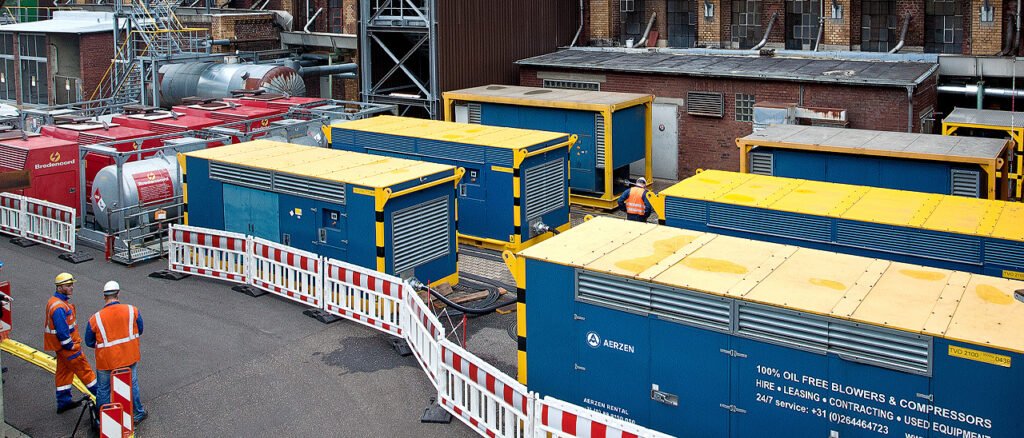
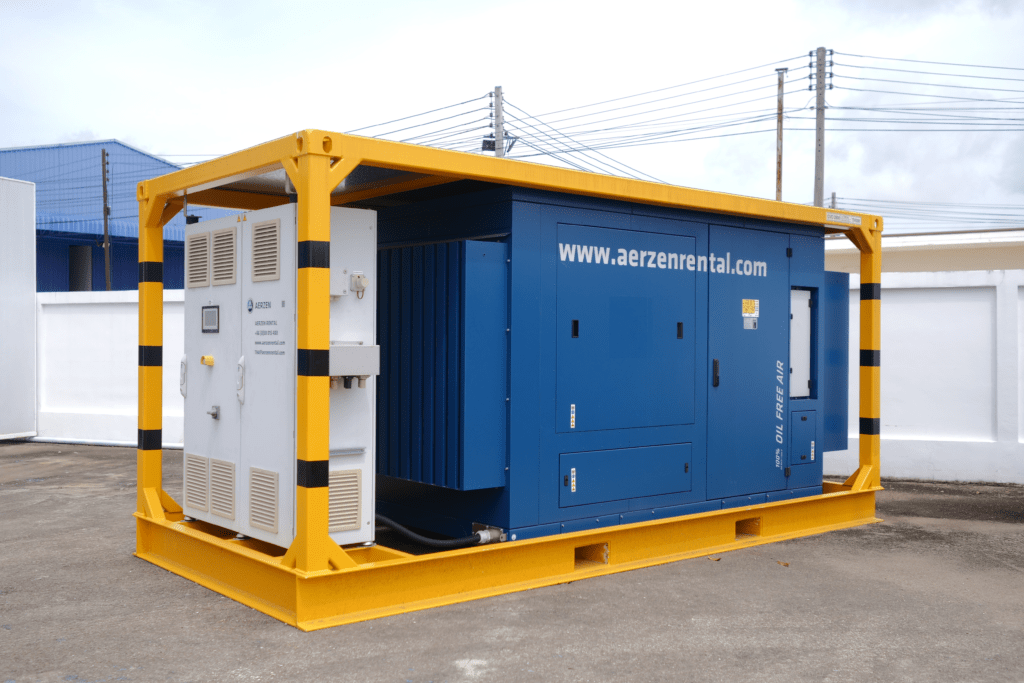
AERZEN Rental Thailand จัดหา oil-free compressed air equipment สำหรับโรงงาน reactive dyeing ทั้งในรูปแบบ short-term rental (emergency / planned shutdown), long-term rental และ Subscription Plan all-inclusive ประกอบด้วย:
TVO Series — Oil-Free Screw Compressor
TVO คือ oil-free screw compressor (ไม่ใช่ turbo blower — ข้อผิดพลาดที่พบบ่อยในการระบุชนิดอุปกรณ์) ออกแบบ oil-free ตั้งแต่ stage การบีบอัด ไม่มี oil-injection ในช่องบีบอัด ให้ pressure 4–10 bar ด้วย specific energy consumption ที่แข่งขันได้กับ oil-lubricated unit ในระดับ efficiency เดียวกัน รายละเอียด technical specification ของ TVO series อ้างอิงจาก AERZEN HQ — Oil-Free Screw Compressors (aerzen.com) เหมาะสำหรับ:
- Dye-jet nozzle supply (3–5 bar, high oil purity demand)
- Instrument air สำหรับ PLC-driven control systems
- Pneumatic actuator บน jigger steamer และ padder
BVS Delta Screw — Oil-Free Screw Blower
BVS เป็น screw blower pressure range 0.4–1.5 bar ด้วย dry screw technology ไม่มีน้ำมันในช่องบีบอัด เหมาะสำหรับ:
- Steam lock air seal ที่ continuous steamer entry/exit zone
- Dye bath agitation air ใน jigger vessel
- Low-pressure fabric conveying ก่อนถึง washing range
Subscription Plan — All-Inclusive สำหรับ Reactive Dyeing Line
Subscription Plan ของ AERZEN Rental Thailand รวม maintenance ทุก 500/2,000/8,000 ชั่วโมง, spare parts, AERconnect remote monitoring และ air quality report เป็น optional add-on สำหรับโรงงานที่ต้องการ Ecopassport audit trail — ทีม field engineer เดินทางถึงโรงงานใน EEC และภาคกลาง ตามเป้าหมาย 24 ชั่วโมงสำหรับ emergency, 3 วันสำหรับ planned deployment
รายละเอียด Subscription Plan และการเปรียบเทียบ TCO (Total Cost of Ownership) ระหว่างการเช่าและซื้อ ดูได้ที่ คู่มือ Subscription Plan ฉบับสมบูรณ์ และ กรอบ TCO เช่าหรือซื้อ Compressor
7. คำถามพบบ่อย (FAQ)
ทำไม ISO 8573-1 Class 1 ถึงไม่เพียงพอสำหรับ reactive dye fixation?
Steam เข้า compressed air line ได้อย่างไร และป้องกันได้อย่างไร?
OEKO-TEX Ecopassport กำหนดให้ต้องมี compressed air certificate หรือเปล่า?
BVS กับ TVO ต่างกันอย่างไร และควรใช้อุปกรณ์ใดที่ steam lock?
AERZEN Rental Thailand ให้บริการ air quality report สำหรับ Ecopassport audit ได้หรือไม่?
ขอ Site Survey ฟรีและใบเสนอราคา
ทีมวิศวกร AERZEN Rental Thailand ประเมิน air quality requirement สำหรับ reactive dyeing line ของคุณ
พร้อมจัดทำ documentation สำหรับ OEKO-TEX / Ecopassport audit
Rent a solution. Expect performance. — AERZEN Rental Thailand · 36/60 Phlu Ta Luang, Sattahip District, Chon Buri 20180
- ISO 8573-1:2010 — Compressed air — Part 1: Contaminants and purity classes. International Organization for Standardization. iso.org/standard/46338.html
- ISO 8573-2:2018 — Test methods for aerosol oil content. ISO. iso.org/standard/67294.html
- OEKO-TEX Standard 100 Edition 2024. OEKO-TEX Association. oeko-tex.com
- ETAD (Ecological and Toxicological Association of Dyes and Organic Pigments). Technical Guidance on Reactive Dyes. 2023. etad.com/publications
- AERZEN Group. Brochure: Chronicle — 150 Years of AERZEN. Aerzener Maschinenfabrik GmbH, 2014.
Last technical review: 2026-06-03

✍️ เกี่ยวกับผู้เขียน
ภราดร วรรณสังข์ (Paradorn Wannasung)
Marketing Communication Specialist · นิเทศศาสตรมหาบัณฑิต (การสื่อสารการตลาดและแบรนด์)
ภราดร (Paradorn) เป็นผู้ดูแลด้านการสื่อสารการตลาดของ AERZEN Rental Thailand จบนิเทศศาสตรมหาบัณฑิต (การสื่อสารการตลาดและแบรนด์) เชี่ยวชาญด้านอุตสาหกรรม B2B ในประเทศไทย มีประสบการณ์การสร้างแบรนด์และคอนเทนต์ในกลุ่มอุตสาหกรรมของไทย
ติดต่อ: pwa@aerzenrental.com · LinkedIn
บทความที่เกี่ยวข้อง
Compressed Air โรงงานอลูมิเนียม Extrusion — ISO Class 0 คุณภาพพื้นผิว
Aluminum Extrusion O...
อ่านต่อ →
Data Center Pneumatic Test Purge Class 0 Blower Rental AERZEN Thailand
Data Center Pneumati...
อ่านต่อ →หัวข้อหลัก: ISO 8573-1 และมาตรฐานคุณภาพอากาศอัด Class 0