Instrument Air Class 0 Dew Point −40 °C สำหรับ District Cooling: ป้องกัน Valve Seat Corrosion และ Positioner Failure ในสภาพอากาศไทย
- Dew point ≤ −40 °C PDP คือข้อกำหนดขั้นต่ำของ Instrument Air สำหรับ district cooling ในสภาพอากาศร้อนชื้นของไทย — ไม่ใช่ −20 °C หรือ ambient-dried air; การใช้ air ที่ dew point ไม่ต่ำพอทำให้เกิด condensation ใน pneumatic line, valve seat corrosion, และ positioner failure ซ้ำๆ
- Pneumatic actuator บน chiller control valve, isolation valve, และ VFD bypass damper ต้องการ Class 0 ISO 8573-1 — ไม่ใช่ Class 1 — เพราะ oil aerosol ≥ 0.01 mg/m³ สร้าง fouling ใน I/P transducer และ stiction ใน valve seat ที่ทำให้ control loop เสียความแม่นยำ
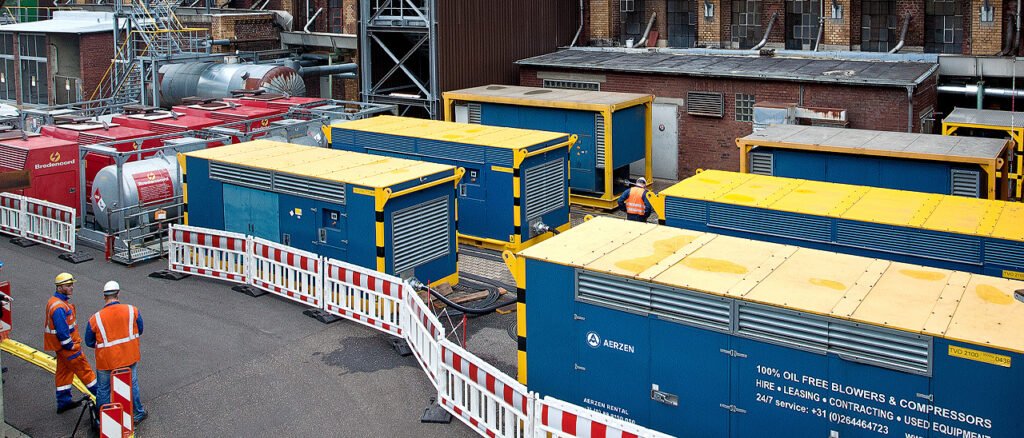
- AERZEN Rental Thailand ส่ง TVO oil-free screw compressor พร้อม integrated refrigeration/desiccant dryer สำหรับ DCS/BMS upgrade outage, expansion phase, และ emergency backup — ครอบคลุม Eastern Seaboard และ EEC ด้วยฐานปฏิบัติการ Sattahip, Chon Buri
District cooling plant ในประเทศไทย — โดยเฉพาะโครงการ EEC Smart City, อาคารสำนักงานขนาดใหญ่ใน Eastern Seaboard, และนิคมอุตสาหกรรมที่ใช้ centralized chilled water — ดำเนินการใน สภาพแวดล้อมที่ท้าทาย Instrument Air อย่างมาก: ความชื้นสัมพัทธ์ 75–90% ตลอดปี, อุณหภูมิสูงสุด 38–40 °C, และ atmospheric dewpoint ที่ ambient อยู่ที่ +18 ถึง +28 °C ทั้งนี้ Instrument Air Loop ที่ขับเคลื่อน pneumatic actuator บน chiller control valve, isolation valve, และ VFD bypass damper จำเป็นต้องมี pressure dewpoint (PDP) ≤ −40 °C และ oil-free ตามมาตรฐาน ISO 8573-1 Class 0 — เพื่อป้องกัน moisture condensation ใน pneumatic line, valve seat corrosion, และ positioner failure ที่รบกวน DCS/BMS control loop ในระยะยาว บทความนี้อธิบาย ทำไม spec ดังกล่าวถึงจำเป็น, อะไร เกิดขึ้นเมื่อ air quality ต่ำกว่าเกณฑ์, และ เมื่อใด rental compressed air system คือทางเลือกที่ถูกต้องระหว่าง DCS upgrade หรือ compressor room offline
ทำไม Dew Point ≤ −40 °C PDP ถึงเป็นข้อกำหนดขั้นต่ำสำหรับ District Cooling ในไทย
Pressure Dewpoint (PDP) คือจุดที่ water vapor ใน compressed air จะ condense เป็นหยดน้ำเหลว ที่ระดับความดันใช้งาน ค่านี้แตกต่างจาก atmospheric dewpoint โดยสิ้นเชิง — compressed air ที่ 7 bar(g) มี PDP สูงกว่า atmospheric dewpoint ของอากาศต้นทางเดิมราว 30–35 °C เสมอ
ทำความเข้าใจ PDP vs. Atmospheric Dewpoint ในบริบทไทย
- Atmospheric air ในไทย: dewpoint ambient +18 ถึง +28 °C (ฤดูร้อน/ฝน)
- After compression ที่ 7 bar(g) (ไม่ผ่าน drying): PDP จะสูงขึ้นโดยประมาณ +30 ถึง +58 °C — condensation เกิดทันทีในระบบ
- หลังผ่าน Refrigeration Dryer เพียงอย่างเดียว: PDP ≈ +3 °C — ยังสูงเกินกว่าที่ pneumatic instrument line รับได้ในสภาพแวดล้อมร้อน
- หลังผ่าน Desiccant Dryer (หรือ Combined System): PDP ≤ −40 °C — นี่คือเกณฑ์ที่ instrument air ใน critical control loop ต้องการ
ในสภาพแวดล้อมอุตสาหกรรมไทย — โดยเฉพาะ outdoor instrument air lines บน cooling tower structure และ exposed pneumatic tubing ใน mechanical room ที่ไม่ได้ air-condition — อุณหภูมิผิวท่อสามารถลดต่ำลงชั่วคราวเมื่อระบบ cooling tower เดินเต็มกำลัง ถ้า PDP ของ Instrument Air ≈ +3 °C และอุณหภูมิผิวท่อลดต่ำกว่า 3 °C ในช่วง partial load หรือ night cycle — condensation จะเกิดใน pneumatic line อย่างหลีกเลี่ยงไม่ได้ ผลที่ตามมาคือ free water ใน actuator body
AERZEN พัฒนา oil-free compressor system ตั้งแต่ปี 1864 และประสบการณ์กว่า 160 ปีในงาน process-critical compressed air ทำให้ AERZEN เข้าใจดีว่าการกำหนด dew point spec ที่ถูกต้องตั้งแต่ต้นคือการลงทุนที่คุ้มค่าที่สุดในระยะยาว สำหรับภาพรวมของระบบ air supply ใน district cooling โปรดอ่าน คู่มือ Oil-Free Air สำหรับ District Cooling และ Chiller Plant
Valve Seat Corrosion และ Positioner Failure: กลไกความเสียหายในภูมิอากาศไทย
เมื่อ Instrument Air มี PDP ที่ไม่ต่ำพอ หรือมี oil contamination เกินเกณฑ์ — กลไกความเสียหายใน pneumatic actuator, valve seat, และ positioner จะเกิดขึ้นในลำดับที่คาดเดาได้ การเข้าใจลำดับนี้ช่วยให้ plant engineer สามารถ diagnose root cause ได้รวดเร็วกว่าการสุ่ม troubleshoot ทีละชิ้นส่วน
Phase 1: Free Water Ingress — Corrosion Initiation
Free water ที่เกิดจาก condensation ใน pneumatic line ไหลเข้าสู่ valve body และ actuator assembly สภาพแวดล้อมร้อนชื้นของไทยเร่งกระบวนการ electrochemical corrosion ใน valve seat (มักเป็น stainless steel 316 หรือ carbon steel + chrome plating) ได้เร็วกว่าในภูมิอากาศ temperate 3–5 เท่า เพราะอุณหภูมิสูงเพิ่ม reaction rate ของ oxidation
ลำดับความเสียหาย: Wet Instrument Air → System Failure
- ขั้นที่ 1 — Pitting Corrosion บน Valve Seat: Free water + chloride ion (จาก atmospheric contamination ใน coastal areas เช่น EEC Chon Buri) ทำให้เกิด pitting บน metal seating surface; pitting ขนาดเล็กเพียง 0.05 mm ทำให้ close-off leakage เกินค่า ANSI Class IV/V specification
- ขั้นที่ 2 — Positioner Relay Fouling: Water droplet + oil residue สร้าง emulsion ที่อุดตัน relay orifice (ขนาด 0.3–0.8 mm) ของ electropneumatic positioner — positioner ไม่สามารถ translate 4–20 mA signal เป็น pneumatic output ได้อย่างแม่นยำ
- ขั้นที่ 3 — Diaphragm และ Elastomer Degradation: Water + สภาวะ humid เร่ง hydrolysis ของ nitrile rubber (NBR) diaphragm — diaphragm แตกหรือ creep ทำให้ actuator เสียแรงและต้องเปลี่ยนทั้งชุด
- ขั้นที่ 4 — Stem Packing Gland Failure: Corrosion บน valve stem + degraded packing ทำให้เกิด external leakage ของ process fluid — กลายเป็น safety event ในระบบ chilled water ที่มีสารเติมแต่งป้องกัน microbiological growth
- ขั้นที่ 5 — Spurious Trip / Control Loop Failure: Positioner signal drift ทำให้ DCS ตรวจพบ valve position feedback ผิดปกติ — DCS อาจ generate spurious trip alarm หรือ enter fallback mode ที่รบกวน chiller sequencing

Oil Contamination: เส้นทางที่สอง สู่ Positioner Failure
แม้ระบบจะมี dew point ที่ถูกต้อง แต่หาก compressed air source เป็น oil-injected compressor โดยไม่มี coalescing filter และ activated-carbon filter ที่เพียงพอ — oil aerosol concentration จะเกิน 0.01 mg/m³ (Class 0 threshold) และเข้าสู่ positioner body ตาม ISA-75.25.01 (Control Valve Diagnostics) standard; oil fouling ใน relay orifice ทำให้ hysteresis เพิ่มขึ้น, deadband ขยาย, และ step-response time ช้าลง — ทั้งหมดนี้วัดได้ด้วย valve signature diagnostic tool และ สามารถป้องกันได้ 100% ด้วย oil-free source
ความสัมพันธ์ระหว่าง oil contamination level กับ positioner failure rate ได้รับการบันทึกโดย NACE International และผู้ผลิต valve รายใหญ่ (Emerson Fisher, Samson, Metso) ว่า Class 1 air (≤ 0.1 mg/m³) ทำให้ positioner lifespan สั้นลง 30–50% เทียบกับ Class 0 ในสภาวะ continuous duty ซึ่งเป็นลักษณะการใช้งานของ district cooling ที่ดำเนินการตลอด 24 ชั่วโมง 365 วัน
Class 0 Instrument Air Specification Matrix สำหรับ District Cooling
ตารางด้านล่างสรุปข้อกำหนด ISO 8573-1:2010 ที่ครอบคลุม 3 มิติหลัก (particulate, water, oil) เปรียบเทียบ Class 0 กับ Class 1 และ Class 2 พร้อมผลกระทบต่อ pneumatic actuator และ positioner ใน district cooling context
| พารามิเตอร์ | Class 0 (Strictest) | Class 1 | Class 2 | ผลกระทบต่อ District Cooling Actuator |
|---|---|---|---|---|
| Oil Aerosol (Total Oil) | ≤ 0.01 mg/m³ | ≤ 0.1 mg/m³ | ≤ 1 mg/m³ | Class 1 มี oil สูงกว่า 10× — เพียงพอก่อ positioner relay fouling ใน 6–18 เดือน |
| Pressure Dewpoint (PDP) | ≤ −40 °C PDP (ตาม project spec) | ≤ −20 °C PDP | ≤ −40 °C PDP (alternate) | −20 °C PDP ไม่เพียงพอสำหรับ outdoor instrument line ในไทย — condensation เสี่ยงในช่วง cool night / partial load |
| Solid Particulate (≥ 0.1 µm) | ตาม project spec (≤ 0.1 mg/m³ หรือต่ำกว่า) | ≤ 0.1 mg/m³ | ≤ 1.0 mg/m³ | Particle ≥ 0.1 µm อุดตัน I/P transducer orifice ขนาด 0.3 mm ได้ภายในไม่กี่สัปดาห์ในสภาพ high-cycling |
| Water Vapor (per ISO 8573-1 Part 8) | ต่ำกว่า Class 1 (ตาม project) | ≤ 0.5 g/m³ | ≤ 0.5 g/m³ | Water vapor ที่เกินเกณฑ์เร่ง elastomer hydrolysis ใน diaphragm actuator |
| Microbiological (per ISO 8573-7) | ตาม project (สำหรับ food/F&B adjacent) | ไม่ระบุ (Part 7) | ไม่ระบุ (Part 7) | Cooling tower ที่มี biocide treatment — instrument air ไม่ควรมี microbial contamination ที่อาจเข้าสู่ open valve body |
| แหล่ง Air ที่ผ่าน Class 0 | Oil-Free Compressor เท่านั้น (TVO / BVS / AT) | Oil-injected + multi-stage filter | Oil-injected + coalescing filter | Oil-free source เป็นวิธีเดียวที่รับประกัน Class 0 ได้อย่างต่อเนื่องโดยไม่ต้องพึ่ง filter maintenance schedule |
| อ้างอิง: ISO 8573-1:2010 (Compressed air quality classes), ISA-7.0.01 (Quality Standard for Instrument Air), ASHRAE Handbook HVAC Applications Chapter 47. Class 0 ใน ISO 8573-1:2010 กำหนดให้ผู้ผลิต/ผู้ใช้ระบุ spec เอง (more stringent than Class 1) — ค่าที่ระบุในตารางนี้อ้างอิงจาก common industrial instrument air practice. | ||||
สำหรับ district cooling ที่ดำเนินการใน EEC หรือ Eastern Seaboard ซึ่งมี salt-laden coastal air และความชื้นสูง, specification ควรกำหนด PDP ≤ −40 °C เป็นอย่างน้อย — บางโครงการ smart city กำหนดถึง −60 °C PDP สำหรับ outdoor control cabinets ตาม ASHRAE HVAC Applications Handbook (Chapter 47 — Instrument Air Systems)
VFD Bypass Damper และ Isolation Valve: จุดที่มักถูกมองข้าม
ในการออกแบบ district cooling plant สมัยใหม่ที่ใช้ Variable Frequency Drive (VFD) บน chilled water pump และ cooling tower fan — VFD bypass damper และ isolation valve เป็น safety-critical components ที่ถูก overlook ใน Instrument Air quality spec บ่อยครั้ง
VFD Bypass Damper: ทำไมถึง Critical กว่าที่คิด
เมื่อ VFD fault หรือ trip — ระบบจะ switch ไปใช้ direct-on-line (DOL) bypass เพื่อรักษา cooling capacity ชั่วคราว กระบวนการนี้เกิดขึ้นภายใน 2–5 วินาที และอาศัย pneumatic actuator บน bypass damper ที่ต้องตอบสนองทันที
ความเสี่ยงหาก Instrument Air ไม่ได้คุณภาพ: VFD Bypass Scenario
- Positioner Stiction ขณะ Emergency: หาก positioner บน bypass damper มี stiction จาก oil fouling — damper อาจไม่เปิดทันใน 2–5 วินาทีที่กำหนด ส่งผลให้ chilled water flow หยุดชะงักและ process equipment downstream overtemperature
- Corroded Isolation Valve ไม่ปิดสนิท: Valve seat ที่มี corrosion pitting จะมี close-off leakage เกิน spec — ทำให้ bypass path ยังมี flow บางส่วนขณะ VFD กำลัง restart ซึ่งทำให้ current surge สูงกว่าที่ design ไว้
- Moisture ใน Actuator ทำให้ Freeze-up ใน Air-Conditioned Area: ใน equipment room ที่ถูก cool ต่ำกว่า PDP ของ Instrument Air — condensed water ใน actuator air supply จะกลายเป็น ice crystal ที่อุดตัน orifice ขนาดเล็ก
Isolation Valve บน Chilled Water Circuit
ใน district cooling plant ขนาดใหญ่ที่มี chiller ≥ 4 units — isolation valve บน chiller supply/return line เป็น quarter-turn pneumatic butterfly valve หรือ pneumatic gate valve ที่ใช้ spring-return actuator สำหรับ fail-safe operation สภาพ actuator ที่เสื่อมจาก moisture และ oil contamination ทำให้:
- Fail-safe direction เปลี่ยนจาก fail-close เป็น fail-in-place เพราะ spring force ไม่เพียงพอที่จะ overcome stiction
- Full-stroke time เพิ่มขึ้นจาก 10–15 วินาที (design) เป็น 30–60+ วินาที ทำให้ chiller sequencing logic ผิดพลาด
- Torque requirement ที่เพิ่มขึ้นทำให้ actuator pneumatic pressure requirement สูงกว่า supply pressure ของ instrument air header — valve ไม่ครบ stroke
เมื่อ Compressor Room Offline: Rental Compressed Air สำหรับ DCS/BMS Upgrade
District cooling plant ที่ดำเนินการมาแล้ว 8–15 ปีในไทยกำลังเข้าสู่ช่วง DCS/BMS major upgrade cycle — เปลี่ยน controller รุ่นเก่าเป็น modern ICS (Industrial Control System) ที่รองรับ Modbus TCP, BACnet/IP, หรือ OPC-UA การ upgrade นี้มักต้องการ planned shutdown ของ instrument air compressor room เพื่อเปลี่ยน pressure header, drain pot, และ air receiver — ซึ่งเป็นหนึ่งใน 3 scenarios หลักที่ rental compressed air มีบทบาทชัดเจน
| Scenario | ระยะเวลาทั่วไป | ข้อกำหนด Air Quality | AERZEN Rental Solution |
|---|---|---|---|
| 1. DCS/BMS Major Upgrade เปลี่ยน controller + I/O module + field device; instrument air header ต้อง depressurize | 7–21 วัน | Class 0, PDP ≤ −40 °C, supply pressure 7 bar(g) ± 0.2 | TVO oil-free screw compressor พร้อม integrated desiccant dryer + standby unit (N+1) |
| 2. Compressor Room Annual Overhaul เปลี่ยน air end bearing, rotor refurbishment, pressure vessel inspection | 5–14 วัน | Class 0, PDP ≤ −40 °C | TVO rental unit เชื่อมต่อ isolation valve บน existing header — plug-and-play ไม่ต้องวางท่อใหม่ |
| 3. Plant Expansion / New Chiller Block เพิ่ม chiller unit ใหม่; instrument air header ยังไม่ complete; chiller test run ต้องการ air | 30–90 วัน | Class 0, PDP ≤ −40 °C, flow ≥ commissioning spec | TVO + BVS screw blower ตาม flow requirement; Subscription Plan all-inclusive พร้อม 24/7 monitoring |
| 4. Emergency Backup (Compressor Failure) Compressor trip โดยไม่มี standby — DCS ยังต้องการ instrument air เพื่อรักษา valve position | 24–72 ชั่วโมง (mobilization) | Class 0, PDP ≤ −40 °C, response time < 4 ชั่วโมง (EEC area) | Emergency Rental 24/7 — AERZEN Rental ส่ง TVO unit พร้อม dryer จากฐาน Sattahip ภายใน 4 ชั่วโมงในพื้นที่ Eastern Seaboard |
| AERZEN Rental Thailand ฐาน Sattahip, Chon Buri — ครอบคลุม EEC / Eastern Seaboard / นิคมอุตสาหกรรมชลบุรี–ระยอง. โทรสายด่วน 24/7: 098-323-2626 | |||
การเชื่อมต่อ Rental Unit เข้ากับ Existing Instrument Air Header
ขั้นตอนการ connect rental unit เข้ากับ instrument air system ที่มีอยู่เดิมนั้นตรงไปตรงมา — AERZEN Rental Thailand ส่ง technician มาพร้อมกับ unit เพื่อตรวจสอบ tie-in point, แรงดัน header, และ dew point requirements ก่อน commissioning ทุกครั้ง ขั้นตอนหลักประกอบด้วย:
- ตรวจสอบ isolation valve condition บน existing header ก่อน tie-in เพื่อป้องกัน backflow ของ contaminated air
- ต่อ rental unit outlet เข้า flexible high-pressure hose (AERZEN supply) ที่ rated pressure ≥ 16 bar ซึ่งเกิน instrument air header pressure ≥ 100%
- Set rental unit outlet pressure ให้สูงกว่า header setpoint 0.3–0.5 bar(g) เพื่อให้ rental unit รับ load ก่อน — คล้ายกับหลักการ load sharing
- ตรวจสอบ PDP ที่ outlet ด้วย portable chilled-mirror dewpoint meter ก่อน open tie-in valve — บันทึกค่าเป็นหลักฐาน pre-commissioning
- Monitor pressure, temperature, และ dew point ต่อเนื่องผ่าน AERZEN mobile monitoring ตลอดระยะ rental
กรณีศึกษา (Illustrative): DCS Upgrade ใน EEC Industrial Complex — 14-Day Instrument Air Rental
กรณีศึกษาเชิงอุตสาหกรรม — Illustrative Scenario (Anonymized)
District Cooling Plant ใน EEC Industrial Complex — การ Replace DCS Controller รุ่นเก่า พร้อม Maintain Instrument Air 24/7
วันของ planned outage
instrument air compressor room
ชั่วโมง downtime
ของ chiller cooling capacity
PDP ที่วัดได้
จาก rental TVO unit
pneumatic actuator
ที่ได้รับ Class 0 air ตลอดโครงการ
Background: Industrial complex ใน Amata City, Chon Buri ที่ประกอบด้วย tenant factories ≥ 40 โรงงาน ใช้ centralized district cooling จาก chiller plant ขนาด 4,000 RT ที่ดำเนินการมา 12 ปี DCS รุ่นเก่า (Honeywell TDC 3000) ต้องถูกแทนที่ด้วย Honeywell Experion PKS — ต้องการ instrument air header depressurization เต็ม 14 วันเพื่อเปลี่ยน field junction box, marshaling cabinet, และ I/O card
ความท้าทาย: Chiller plant ไม่สามารถหยุดให้ cooling ได้ระหว่าง upgrade — tenant factories มี SLA กับ cooling provider ว่า chilled water temperature ต้องอยู่ที่ 6–8 °C ± 0.5 °C ตลอดเวลา ทั้งนี้ pneumatic control valve และ actuator ทั้งหมด 320+ จุดยังต้องการ instrument air ตลอด 14 วัน แม้ DCS จะอยู่ใน transition state
Solution: AERZEN Rental Thailand deploy TVO 150 oil-free screw compressor (2 units, N+1 configuration) พร้อม integrated twin-tower desiccant dryer — tie-in ที่ existing header isolation flange โดยไม่ต้องวางท่อใหม่
- PDP ที่วัดได้: −43 °C ± 2 °C ตลอด 14 วัน (เกิน project spec ที่กำหนด ≤ −40 °C)
- Oil content: ตรวจวัด < 0.003 mg/m³ (ต่ำกว่า Class 0 threshold 3×)
- Pressure stability: 6.8–7.0 bar(g) ตลอด — ไม่มี pressure dip ที่ทำให้ actuator เสีย control signal
- DCS migration เสร็จสมบูรณ์ตาม schedule — 0 chiller trip ที่เกิดจาก instrument air quality
หมายเหตุ: กรณีศึกษานี้เป็น illustrative scenario จากประสบการณ์ของ AERZEN Rental Thailand ในงานลักษณะเดียวกันใน Eastern Seaboard — ข้อมูลเชิง specific (ชื่อบริษัท, location, ตัวเลขที่แน่นอน) ถูก anonymize เพื่อคุ้มครองข้อมูลลูกค้า สอบถามรายละเอียด case study จริงได้ที่ thai@aerzenrental.com
คำถามที่พบบ่อย (FAQ)
FAQ — Instrument Air Quality สำหรับ District Cooling
Dew point −20 °C ที่ได้จาก refrigeration dryer เพียงพอสำหรับ district cooling ในไทยหรือไม่?
ไม่เพียงพอสำหรับ outdoor instrument lines และ cooling tower-mounted actuator ใน tropical climate ของไทย Refrigeration dryer ให้ PDP ≈ +3 °C ถึง −20 °C ขึ้นอยู่กับ design — แต่ในวันที่อุณหภูมิ surface ของ pneumatic line ลดต่ำกว่า 3 °C (ในบางส่วนของ outdoor structure ช่วงกลางคืนหรือ partial load) condensation จะเกิดขึ้น สำหรับ district cooling ใน EEC และ Eastern Seaboard, PDP ≤ −40 °C (ต้องใช้ desiccant dryer หรือ combined system) คือมาตรฐานที่ถูกต้อง
Class 1 ISO 8573-1 แตกต่างจาก Class 0 อย่างไรในทางปฏิบัติ สำหรับ valve positioner?
Class 1 อนุญาต oil aerosol สูงสุด 0.1 mg/m³ ในขณะที่ Class 0 กำหนดไว้ที่ ≤ 0.01 mg/m³ ในทางปฏิบัติ ความแตกต่าง 10× นี้มีนัยสำคัญมากต่อ positioner relay orifice ขนาด 0.3–0.8 mm — oil residue ที่ flow ผ่านในอัตรา 0.1 mg/m³ จะสร้าง fouling layer ที่มองเห็นได้ภายใน 12–18 เดือน ในขณะที่ Class 0 (0.01 mg/m³ หรือต่ำกว่า) จาก oil-free source แทบไม่มี fouling ที่วัดได้ตลอดอายุการใช้งาน positioner 10–15 ปี ผู้ผลิต positioner รายใหญ่เช่น Emerson, Samson, ABB แนะนำ Class 0 สำหรับ high-cycling application เช่น chiller control valve ที่ทำงาน 24/7
Rental compressor unit เชื่อมต่อเข้ากับ existing instrument air header ได้โดยตรงหรือไม่?
ได้ — AERZEN Rental unit มาพร้อม flexible high-pressure connection set ที่รองรับ header size มาตรฐาน 1″ ถึง 4″ (DN25 ถึง DN100) ขั้นตอน: (1) ตรวจสอบ isolation valve สภาพก่อน tie-in, (2) ต่อ flexible hose ที่ rated pressure ≥ 2× header MAWP, (3) set rental unit pressure ให้สูงกว่า header setpoint 0.3–0.5 bar, (4) ตรวจวัด PDP ที่ outlet ก่อน open tie-in, (5) monitor ต่อเนื่อง AERZEN technician อยู่ on-site ช่วง commissioning และ provide remote monitoring ตลอด rental period
TVO Series กับ BVS Series ต่างกันอย่างไร สำหรับ instrument air ใน district cooling?
TVO Series คือ oil-free screw compressor ที่ออกแบบเฉพาะสำหรับ high-pressure instrument air (6–10 bar(g)) — เหมาะกับ district cooling ที่ต้องการ supply pressure 5–7 bar(g) สำหรับ pneumatic actuator โดยตรง BVS Series คือ oil-free screw blower สำหรับ low-pressure process air (0.3–1.5 bar(g)) — ไม่เหมาะกับ instrument air loop ที่ต้องการ pressure ≥ 5 bar สำหรับ instrument air application ใน district cooling ทุก case, TVO Series คือ correct selection สอบถาม flow และ pressure requirement ได้ที่ 038-015-488
ต้องใช้ dryer แยกต่างหากกับ TVO rental unit ไหม หรือ TVO มี dryer built-in?
AERZEN Rental Thailand จัดหา TVO package ที่มี integrated refrigeration dryer (PDP ≈ +3 °C) เป็น standard — สำหรับ instrument air ใน district cooling ที่ต้องการ PDP ≤ −40 °C จะต้อง add desiccant dryer module เพิ่มเติม (AERZEN supply ได้ในชุด Subscription Plan all-inclusive) rental package สามารถ configure ได้ตาม project spec และทีม AERZEN จะ recommend configuration ที่ถูกต้องหลังจาก review site requirement
ระยะเวลา mobilization จากฐาน Sattahip ถึง site ใน EEC / Eastern Seaboard นานแค่ไหน?
สำหรับพื้นที่ Eastern Seaboard (Chon Buri, Rayong, Chachoengsao) — AERZEN Rental Thailand mobilize ได้ภายใน 4–8 ชั่วโมงสำหรับ emergency call จากฐาน Sattahip กรณี planned rental: ต้องการ lead time 3–5 วันทำการเพื่อ prepare unit, integrate dryer module, และ dispatch พร้อม commissioning engineer สำหรับโครงการนอก Eastern Seaboard (Bangkok, อยุธยา, ภาคเหนือ) กรุณาติดต่อทีมเพื่อ confirm lead time ตามโลจิสติกส์จริง
ขอข้อมูลเพิ่มเติมและใบเสนอราคา
ทีม AERZEN Rental Thailand พร้อมให้คำปรึกษาด้านการ spec Instrument Air สำหรับ district cooling — ตั้งแต่การเลือก Class 0 dew point requirement ไปถึงการ configure rental package สำหรับ DCS/BMS upgrade outage ทั้ง planned และ emergency
ไม่มีการเผยแพร่ราคาออนไลน์ — ราคาขึ้นอยู่กับ flow requirement, pressure spec, ระยะเวลา rental, และสถานที่ติดตั้ง ขอใบเสนอราคาที่ตรงกับโครงการของคุณได้ทันที
อ่านเพิ่มเติม: Oil-Free Support Air สำหรับ District Cooling และ Chiller Plant — ภาพรวมระบบ | AERZEN TVO Oil-Free Screw Compressor — คู่มือเลือก Series | Emergency Blower และ Compressor Rental 24/7
Last technical review: 2026-06-03 · Tagline: “Rent a solution. Expect performance.” — AERZEN Rental Thailand · www.aerzenrentalth.com

✍️ เกี่ยวกับผู้เขียน
ภราดร วรรณสังข์ (Paradorn Wannasung)
Marketing Communication Specialist · นิเทศศาสตรมหาบัณฑิต (การสื่อสารการตลาดและแบรนด์)
ภราดร (Paradorn) เป็นผู้ดูแลด้านการสื่อสารการตลาดของ AERZEN Rental Thailand จบนิเทศศาสตรมหาบัณฑิต (การสื่อสารการตลาดและแบรนด์) เชี่ยวชาญด้านอุตสาหกรรม B2B ในประเทศไทย มีประสบการณ์การสร้างแบรนด์และคอนเทนต์ในกลุ่มอุตสาหกรรมของไทย
ติดต่อ: pwa@aerzenrental.com · LinkedIn
บทความที่เกี่ยวข้อง


หัวข้อหลัก: Instrument Air กับ Process Air ต่างกันอย่างไร