การเชื่อม Rental Blower เข้า Compressed Air Ring Main: Temporary Piping Design สำหรับการติดตั้งแบบ Rental
- การต่อ rental blower เข้า ring main ที่มีอยู่ต้องใช้ isolation valve ที่ถูกต้อง เพื่อป้องกันผลกระทบต่อระบบที่ยังเดิน
- Allowable pressure drop ของท่อชั่วคราว ไม่ควรเกิน 0.1 bar สำหรับท่อตั้งแต่ connection point ถึง ring main header
- การเลือก flexible hose หรือ short pipe run ขึ้นอยู่กับ flow rate, distance, และ operating pressure — บทความนี้ให้ sizing guide ครบ
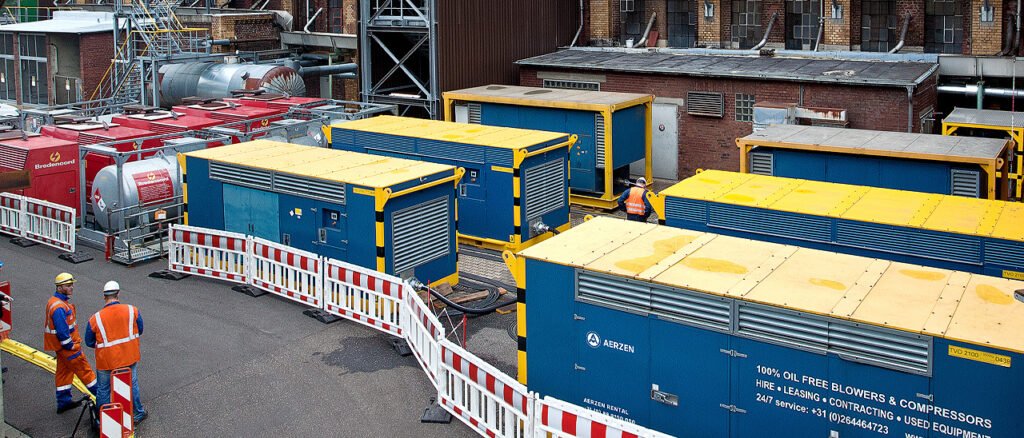
AERZEN ออกแบบและสนับสนุนการติดตั้ง rental blower มาตั้งแต่ปี 1864 — และหนึ่งในสถานการณ์ที่วิศวกรโรงงานถามบ่อยคือ: “เชื่อม rental blower เข้า compressed air ring main ชั่วคราวอย่างไรให้ถูกต้องและปลอดภัย” คำตอบไม่ใช่แค่ต่อท่อให้ครบ — แต่ต้องคำนวณ pressure drop ของท่อชั่วคราว เลือก flexible hose ให้ถูกขนาด และติดตั้ง isolation valve ในตำแหน่งที่ถูกต้องเพื่อป้องกันผลกระทบต่อระบบที่กำลังเดินอยู่
บทความนี้เจาะเฉพาะ temporary piping connection สำหรับ rental deployment — ไม่ใช่การออกแบบระบบท่อถาวร (ซึ่งครอบคลุมใน คู่มือออกแบบระบบท่อลมอัดในโรงงาน) เนื้อหาครอบคลุมตั้งแต่การประเมินระบบที่มีอยู่ การ size หัวต่อ การคำนวณ pressure drop ไปจนถึงขั้นตอน commissioning
ทำไมการเชื่อม Rental Unit เข้า Ring Main ถึงต่างจากการออกแบบท่อถาวร
ระบบ compressed air ring main ที่ติดตั้งถาวรในโรงงานได้รับการออกแบบโดยคำนึงถึง demand หลายจุด, สมดุลความดัน, และ flow velocity ที่ต้องการ เมื่อคุณต่อ rental blower เข้าไปกลางระบบที่กำลังเดินอยู่ มีตัวแปรเพิ่มเติมที่ต้องจัดการ:
- Supply point ใหม่ — ring main มีแหล่งจ่ายอยู่แล้ว การเพิ่ม rental unit อาจสร้าง back-pressure หรือ pressure imbalance ถ้าไม่ติดตั้ง check valve ที่ถูกต้อง
- Pipe sizing ที่แตกต่างกัน — rental unit มาพร้อมกับ discharge flange ขนาดหนึ่ง แต่ ring main อาจเป็นขนาดอื่น การ reduce หรือ expand ต้องคำนวณ velocity และ pressure drop ใหม่
- ระยะทางชั่วคราว — rental unit อาจวางอยู่ข้างนอกอาคาร หรือห่างจาก tie-in point 10–50 เมตร ต้องคำนวณ pipe run นั้น ๆ แยกต่างหาก
- การถอดออกเมื่อเสร็จงาน — ทุกอย่างต้องถอดได้สะอาด ไม่ทิ้ง dead leg ไว้ในระบบหลัก
- Cross-contamination risk — ถ้าโรงงานต้องการ ISO 8573-1 Class 0 (oil-free) ท่อชั่วคราวและ connection point ต้องไม่นำ oil contamination เข้าระบบ
สิ่งที่ต่างจากการต่อ generator ชั่วคราวเข้า switchboard คือ compressed air system มี dynamic flow ตลอดเวลา ความดันใน ring main ไม่คงที่ — มันเปลี่ยนตามการใช้งาน การเชื่อม supply point ใหม่เข้าไปต้องเข้าใจ system curve ของ ring main ที่มีอยู่ก่อน
ขั้นที่ 1 — ประเมินระบบที่มีอยู่ก่อนเชื่อมต่อ
ก่อนเลือก pipe size หรือ hose ต้องรวบรวมข้อมูลจากระบบ ring main ที่มีอยู่ก่อน ข้อมูลที่จำเป็นมีดังนี้:
ข้อมูลที่ต้องเก็บจาก P&ID และ system readings
| ข้อมูลที่ต้องเก็บ | หน่วย | วิธีหา | ทำไมสำคัญ |
|---|---|---|---|
| Operating pressure ของ ring main | bar(g) | Line pressure gauge ที่ header หลัก | กำหนด discharge pressure ที่ rental unit ต้องจ่าย |
| Minimum acceptable header pressure | bar(g) | Process engineer / equipment spec | กำหนด allowable pressure drop ของท่อชั่วคราว |
| Pipe diameter ของ ring main ที่ tie-in point | DN / inch | P&ID หรือ isometric drawing | กำหนด fitting และ reducer/expander ที่ต้องใช้ |
| Flow rate ที่ rental unit ต้องจ่าย (Q) | m³/min (FAD) | Gap analysis: rated capacity − existing supply | Input หลักสำหรับ pipe sizing |
| ระยะทางจาก rental unit ถึง tie-in point (L) | เมตร | Site survey | Input สำหรับคำนวณ friction loss |
| จำนวนและชนิด fittings บนท่อชั่วคราว | จำนวน | Layout plan | แปลงเป็น equivalent length สำหรับ pressure drop calculation |
| Material ของ ring main | — | P&ID / plant standard | กำหนด compatibility ของ temporary connection material |
ห้ามรวบรวมข้อมูลจาก nameplate ของอุปกรณ์ที่มีอยู่เพียงอย่างเดียว — วัดค่าจริงจาก pressure gauge บน ring main ขณะที่โรงงานกำลังเดินงาน เพราะค่าออกแบบ (design pressure) อาจต่างจาก operating pressure จริงได้ถึง 0.3–0.5 bar
ขั้นที่ 2 — Sizing Flexible Hose หรือ Short Pipe Run
เมื่อได้ข้อมูลระบบแล้ว การเลือกว่าจะใช้ flexible hose หรือ rigid short pipe run ขึ้นอยู่กับ flow rate และระยะทาง:
แนวทางการเลือก: Flexible Hose vs Rigid Pipe
| เกณฑ์ | Flexible Hose | Rigid Pipe (Carbon Steel / Stainless) |
|---|---|---|
| ระยะทาง | ไม่เกิน 5 เมตร (แนะนำ ≤ 3 ม.) | ทุกระยะ — เหมาะสำหรับ >5 เมตร |
| Flow rate | ≤ 10 m³/min (FAD) ที่ 7 bar(g) | ทุก flow rate — ต้อง size อย่างถูกต้อง |
| การติดตั้ง | รวดเร็ว — ใช้เวลา 30–60 นาที | ใช้เวลาหลายชั่วโมง — ต้องเชื่อมหรือต่อ flange |
| ข้อจำกัด | Pressure rating ตาม hose spec; อุณหภูมิจำกัด; ต้องผูก/ยึด (hose reaction force) | ต้องมี support และ expansion joint; ซับซ้อนกว่า |
| ค่า pressure drop | สูงกว่า rigid pipe ในขนาดเท่ากัน (roughness สูงกว่า) | ต่ำกว่า — pipe roughness ε ≈ 0.046 mm (carbon steel) |
| Oil-free compliance | เลือก hose ที่ผ่าน clean-air certification (ไม่ใช่ hydraulic hose ทั่วไป) | ทำความสะอาดภายในก่อนใช้งาน (purge + visual) |
| เมื่อถอดออก | ถอดได้ทันที ไม่ทิ้ง dead leg | ต้อง cap หรือ blind flange ที่ tie-in point |
Pipe Sizing Reference — Velocity และ DN Minimum สำหรับ Discharge Air
มาตรฐานอุตสาหกรรม (CAGI Technical Data Sheet; ISO 7183) แนะนำให้ pipe velocity บน discharge line ไม่เกิน 15 m/s เพื่อควบคุม noise, pressure drop, และ erosion ตารางด้านล่างแสดง minimum pipe size ที่แนะนำ:
| Flow Rate (FAD) | ที่ 4 bar(g) | ที่ 7 bar(g) | Velocity ที่ DN จากตาราง (≈) | หมายเหตุ |
|---|---|---|---|---|
| 3 m³/min | DN 40 (1.5″) | DN 32 (1.25″) | 11–13 m/s | BVO 15–25 ทั่วไป |
| 5 m³/min | DN 50 (2″) | DN 40 (1.5″) | 12–14 m/s | |
| 8 m³/min | DN 65 (2.5″) | DN 50 (2″) | 13–15 m/s | BVO 50–75 ทั่วไป |
| 15 m³/min | DN 80 (3″) | DN 65 (2.5″) | 12–14 m/s | |
| 25 m³/min | DN 100 (4″) | DN 80 (3″) | 13–15 m/s | BVO 150–200 หรือ DVO ขนาดกลาง |
| 40 m³/min | DN 125 (5″) | DN 100 (4″) | 14–15 m/s | |
| หมายเหตุ: ค่า FAD = Free Air Delivery ที่บรรยากาศ 1 bar(a), 20°C. Pipe size ข้างต้นเป็นค่า minimum — ถ้าระยะท่อชั่วคราว >20 ม. ให้เลือก DN ที่สูงกว่าหนึ่งขนาด เพื่อชดเชย friction loss เพิ่มเติม | ||||
“การ undersize discharge pipe ของ rental unit เพียง 1 ขนาด (เช่น DN50 แทน DN65) อาจเพิ่ม pressure drop ถึง 0.15–0.20 bar บนระยะ 20 เมตร — เท่ากับสูญเสีย operating pressure ที่ header ไปเกือบ 3% ของแรงดันระบบ”
— หลักการออกแบบตาม CAGI Technical Paper TP-2129: Compressed Air Piping Recommendations for Compressor Installations
ขั้นที่ 3 — คำนวณ Allowable Pressure Drop
Pressure drop ของท่อชั่วคราวจาก rental unit ไปถึง ring main header คำนวณด้วย Darcy-Weisbach equation ซึ่งเป็น standard ที่ใช้กันทั่วโลกในงาน compressed air piping:
สูตรคำนวณ Pressure Drop
ΔP = f × (L_eq / D) × (ρ × v²) / 2

โดย:
  ΔP   = pressure drop (Pa)
  f    = Darcy friction factor (dimensionless) — คำนวณจาก Moody chart หรือ Colebrook equation
  L_eq = equivalent length รวม fittings (m) = L_straight + Σ(equivalent length ของ elbow, valve, reducer)
  D    = internal pipe diameter (m)
  ρ    = density ของ compressed air ที่ operating pressure (kg/m³)
  v    = mean flow velocity (m/s) = Q_actual / (π × D² / 4)

สำหรับ Q_actual (m³/s) ที่ operating pressure P (bar(a)):
  Q_actual = Q_FAD × (1.013 / P)

ค่า equivalent length ของ fittings ทั่วไป (approximate — carbon steel):
  90° elbow (standard)     : 30 × D
  45° elbow                : 16 × D
  Gate valve (fully open)  : 13 × D
  Ball valve (fully open)  : 3 × D
  Butterfly valve (fully open): 40 × D
  Reducer (concentric, 2:1 ratio): 10 × D
ตัวอย่างการคำนวณ: AERZEN BVO 50 เชื่อมเข้า Ring Main ระยะ 15 เมตร
| พารามิเตอร์ | ค่า | หมายเหตุ |
|---|---|---|
| Flow rate (Q_FAD) | 8 m³/min = 0.133 m³/s | BVO 50 ตามตัวอย่าง |
| Operating pressure (P) | 7.5 bar(g) = 8.5 bar(a) | Header pressure วัดจริง |
| Q_actual ที่ 8.5 bar(a) | 0.133 × (1.013 / 8.5) = 0.0159 m³/s | แปลง FAD → actual volumetric flow |
| Pipe selected | DN 65 (ID ≈ 0.0686 m) | จากตาราง sizing ด้านบน |
| Velocity (v) | 0.0159 / (π × 0.0686² / 4) = 4.3 m/s | ต่ำกว่า 15 m/s — ผ่าน |
| Equivalent length (L_eq) | 15 m + 2×(30×0.0686) + 1×(13×0.0686) = 15 + 4.12 + 0.89 = 20.0 m | ท่อตรง 15 ม. + 2 elbow 90° + 1 gate valve |
| Air density ที่ 8.5 bar(a), 35°C | ρ = P×M / (R×T) = 8.5×10⁵×0.029 / (8.314×308) = 9.62 kg/m³ | อากาศแห้ง M = 0.029 kg/mol |
| Friction factor (f) — Moody/Colebrook, turbulent | ≈ 0.017 (Re ≈ 1.5×10⁵, ε/D ≈ 0.00067) | Carbon steel DN65 |
| Pressure drop (ΔP) | 0.017 × (20.0 / 0.0686) × (9.62 × 4.3²) / 2 = 1,862 Pa ≈ 0.019 bar | ต่ำกว่า allowable 0.1 bar — ผ่าน |
ตัวอย่างข้างต้นแสดงว่า DN65 บนระยะ 15 เมตรให้ pressure drop เพียง 0.019 bar — เหลือ margin อีกมากจาก allowable 0.1 bar แต่ถ้า pipe ลดเป็น DN50 บนระยะเดียวกัน velocity จะพุ่งเป็น 7.9 m/s และ pressure drop ≈ 0.065 bar — ยังอยู่ใน allowable แต่ใกล้ขีดจำกัดมากกว่า และถ้าระยะเพิ่มเป็น 40 เมตรจะเกิน 0.1 bar ทันที
Allowable Pressure Drop — Guideline
ค่า allowable pressure drop บนท่อชั่วคราวจาก rental unit ถึง ring main header ควรพิจารณาจากสองเงื่อนไข:
- Ring main header pressure minimum — ถ้า process equipment ต้องการแรงดัน 7.0 bar(g) และ rental unit จ่ายได้ 7.5 bar(g) allowable ΔP = 0.5 bar แต่แนะนำให้ใช้ safety margin เหลือไว้อย่างน้อย 0.3 bar
- Industry rule-of-thumb — CAGI แนะนำว่า distribution piping pressure drop ควรไม่เกิน 0.1 bar (1.5 psi) สำหรับระยะทาง feeder ทั่วไป สำหรับ temporary connection ระยะสั้น ค่านี้เป็น conservative target ที่ดี
- Total system budget — รวม pressure drop ของท่อชั่วคราว + aftercooler/dryer (ถ้ามี) + ท่อใน ring main ถึง point of use แล้วต้องไม่เกิน rental unit’s rated discharge pressure − process minimum pressure
ขั้นที่ 4 — การติดตั้ง Isolation Valve เพื่อป้องกันระบบหลัก
Isolation valve คือกุญแจสำคัญที่สุดในงาน temporary connection — ช่วยให้ถอดหรือ commission rental unit ได้โดยไม่หยุดระบบหลัก และป้องกัน back-flow ที่อาจเกิดขึ้นเมื่อ rental unit หยุดทำงาน
Configuration ที่แนะนำ: Tie-In Package
[RENTAL BLOWER DISCHARGE]
         |
    [SILENCER]
         |
    [AFTERCOOLER] (ถ้าต้องการ)
         |
    [ISOLATION VALVE A] ← ปิด/เปิด rental unit ออกจากระบบ
         |
    [CHECK VALVE] ← ป้องกัน back-flow เข้า rental unit เมื่อหยุดงาน
         |
    [PRESSURE GAUGE] ← monitor ΔP across tie-in segment
         |
─────────┴──────── [TIE-IN POINT บน RING MAIN HEADER]
                         |
                   [ISOLATION VALVE B] ← ปิดเฉพาะส่วนท่อ ring main เพื่อ hot-tap
                         |
              [EXISTING RING MAIN HEADER (ยังเดินอยู่)]
การเลือกชนิด Isolation Valve
| ชนิด Valve | เหมาะสำหรับ | ข้อดี | ข้อจำกัด |
|---|---|---|---|
| Ball Valve | DN 15–100, pressure ≤ 16 bar(g) | เปิด/ปิดเร็ว (quarter-turn); pressure drop ต่ำ; ราคาสมเหตุสมผล | ไม่ควรใช้เป็น throttle valve — เปิดเต็มหรือปิดสนิทเท่านั้น |
| Gate Valve | DN 65–200, สำหรับ main header isolation | Pressure drop ต่ำมากเมื่อเปิดเต็ม; ราคาถูก | เปิด/ปิดช้า; ไม่เหมาะ partial open; อาจมี seat wear |
| Butterfly Valve | DN 80+, ท่อขนาดใหญ่ | น้ำหนักเบา; ราคาถูกในขนาดใหญ่; compact | Pressure drop สูงกว่า ball/gate เมื่อเปิดเต็ม; ต้อง lug-type สำหรับ line service |
| Check Valve (NRV) | Discharge line หลัง rental unit | ป้องกัน back-flow อัตโนมัติ; ไม่ต้องการ manual operation | ต้องเลือก cracking pressure ให้ต่ำกว่า normal discharge pressure — ตรวจสอบ spec sheet |
ต้องติดตั้ง check valve บน discharge line ของ rental unit ทุกครั้ง โดยไม่มีข้อยกเว้น เมื่อ rental blower หยุดทำงาน (emergency stop, planned shutdown, หรือ power failure) ความดันจาก ring main จะย้อนกลับเข้าหา discharge port ได้ทันที ซึ่งอาจทำให้ blower หมุนย้อน (back-rotation) และเสียหายได้
ขั้นที่ 5 — ขั้นตอน Hot-Tap Connection โดยไม่หยุดการผลิต
ในกรณีที่โรงงานไม่สามารถหยุดระบบ ring main ได้ การเชื่อม rental unit เข้าระบบต้องทำแบบ hot-tap (live tap) ซึ่งต้องการขั้นตอนที่รัดกุม:
ตรวจสอบว่า rental blower ผ่าน pre-delivery inspection ครบ: discharge pressure match, safety valve calibrated, oil-free compliance verified (สำหรับ ISO 8573-1 Class 0 application ต้องใช้ DVO หรือ BVO series — ไม่ใช่ oil-lubricated unit)
ปิด isolation valve B บน ring main ที่ tie-in point (ถ้ามี) ล้างอากาศและตรวจสอบว่า stub-end สะอาด เชื่อมหรือ flange ต่อ tee-piece เข้ากับ ring main header — งานนี้อาจต้อง hot-tap machine ถ้าไม่มี nozzle stub อยู่แล้ว
วาง pipe run หรือ flexible hose จาก rental unit discharge ถึง tie-in point ติดตั้ง isolation valve A และ check valve ใน configuration ตามแผนผังด้านบน ตรวจสอบ flange bolt torque และ gasket condition
ปิด isolation valve A (rental side) และ valve B (ring main side) ทั้งคู่ เปิด rental blower ขึ้นมา pressurize ท่อชั่วคราวถึง operating pressure ทดสอบ leak ด้วย soapy water หรือ gas leak detector ที่ทุก joint — ห้ามเปิด valve B จนกว่าจะ confirm ไม่มี leak
ค่อย ๆ เปิด isolation valve A ให้ pressure ในท่อชั่วคราวเท่ากับ ring main pressure (ดู pressure gauge ทั้งสองฝั่ง) จากนั้นจึงค่อย ๆ เปิด valve B อย่างช้า ๆ — ห้าม slam open เพราะจะเกิด pressure surge ใน ring main
เดิน rental blower ที่ load เต็มและตรวจสอบ: discharge pressure ที่ header header pressure ที่ minimum acceptable level vibration บน pipe run ทุก 30 นาทีในชั่วโมงแรก บันทึกค่าไว้เป็น baseline สำหรับ monitoring ตลอดระยะเวลาเช่า
Oil-Free Air Compliance ในงาน Rental Connection
งาน F&B (food and beverage), อุตสาหกรรมอาหาร (ISO 22000), อิเล็กทรอนิกส์, หรือโรงงานที่ต้องการ compressed air สัมผัสผลิตภัณฑ์โดยตรง ต้องการอากาศที่ตรงตาม ISO 8573-1 Class 0 (oil-free) ซึ่งมีข้อกำหนดพิเศษสำหรับการเชื่อม rental unit:
- ใช้ rental unit ที่เป็น oil-free โดย design เท่านั้น — AERZEN DVO (Delta Blower — oil-free by design) และ BVO (oil-free blower series) ผ่าน ISO 8573-1 Class 0 ไม่ใช่ oil-flooded unit ที่มี downstream filter เพราะ filter อาจ fail โดยไม่มีสัญญาณ
- ท่อชั่วคราวต้องสะอาดและ oil-free — ก่อนใช้งาน purge ด้วย clean dry air ไม่น้อยกว่า 5 นาที ห้ามใช้ pipe ที่เคยใช้กับ oil-lubricated system มาก่อน โดยไม่ผ่านการทำความสะอาดอย่างเป็นทางการ
- Flexible hose ต้องเป็น compressed air grade — ไม่ใช่ hydraulic hose ทั่วไป เพราะ hydraulic hose อาจ leach สารเคมีเข้าระบบอากาศได้ ใช้ hose ที่ผลิตมาสำหรับ compressed air โดยเฉพาะ (เช่น PU air hose, PTFE-lined, หรือ stainless-braided)
- Gasket material — ใช้ PTFE หรือ EPDM gasket สำหรับ food-grade application ห้ามใช้ graphite หรือ rubber gasket ที่ไม่รับรองสำหรับอากาศสัมผัสอาหาร
- บันทึก oil carry-over verification — ทีม AERZEN สามารถจัดทำ Class 0 compliance documentation สำหรับ rental deployment ซึ่งเป็นหลักฐานสำหรับ food safety audit
AERZEN พัฒนา oil-free blower technology มาตั้งแต่ทศวรรษ 1970 — Delta Blower และ DVO series ออกแบบโดยไม่มีน้ำมันในห้องอัดโดยพื้นฐาน (oil-free by design) ไม่ใช่แค่มี filter downstream การเช่า AERZEN rental unit จึงรับประกัน oil-free compliance ได้ตั้งแต่วันแรกที่เดินเครื่อง ไม่ต้องรอผล lab test ก่อนเริ่มใช้งาน
สำหรับหลักการออกแบบระบบท่อลมอัดถาวรในโรงงาน อ่านต่อที่ คู่มือออกแบบระบบท่อลมอัดในโรงงาน (Piping System Design Guide) — ซึ่งครอบคลุมการเลือก ring main configuration, loop vs. dead-end, และ sizing สำหรับ permanent installation
FAQ — คำถามที่ถามบ่อยจากทีมวิศวกรไทย
ต้องมี P&ID อัปเดตก่อนเชื่อม rental unit เข้า ring main ไหม?
แนะนำให้ทำ as-built sketch (ไม่จำเป็นต้องเป็น full P&ID) ที่แสดง tie-in point, valve location, pipe route, และ hose/pipe size ของ temporary connection ไว้ก่อน เพื่อประโยชน์ในการ commission, troubleshoot, และถอดออกเมื่อเสร็จงาน โดยเฉพาะในโรงงานที่มี ISO 9001 หรือ food safety management system — safety inspection team มักจะขอเอกสารนี้
ต้องใช้ aftercooler กับ rental blower ก่อนเชื่อมเข้า ring main ไหม?
ขึ้นอยู่กับ application. Blower (positive displacement) จ่ายอากาศที่ อุณหภูมิสูงกว่า ambient ประมาณ 40–80°C (แล้วแต่ compression ratio) ถ้า ring main มี dryer อยู่แล้วและ dryer รับ temperature inlet นั้นได้ ก็ไม่จำเป็นต้องมี aftercooler แยก แต่ถ้า tie-in point อยู่ downstream ของ dryer หรือ temperature sensitive process อยู่ใกล้ แนะนำให้ติดตั้ง compact aftercooler และ moisture separator ก่อน tie-in AERZEN rental package มาพร้อม integrated aftercooler ใน some configurations — สอบถามทีมงานได้โดยตรง
ถ้า ring main pressure ต่ำกว่า discharge pressure ของ rental blower จะเกิดอะไรขึ้น?
ถ้า discharge pressure ของ rental unit สูงกว่า ring main operating pressure (ซึ่งเป็นกรณีปกติ) อากาศจะไหลจาก rental unit เข้าสู่ ring main ตามธรรมชาติ แต่ถ้า set point ของ rental unit ต่ำกว่า ring main pressure อากาศจะย้อนกลับ check valve จะรับ duty นั้น แต่ rental unit จะไม่จ่าย flow จริง วิศวกรต้อง adjust unloading pressure ของ rental unit ให้สูงกว่า ring main maximum pressure อย่างน้อย 0.3 bar เสมอ
flexible hose ยาวสูงสุดได้เท่าไหร่?
ในทางปฏิบัติ ไม่แนะนำ flexible hose ยาวเกิน 5 เมตรต่อ section เพราะ: (1) pressure drop สูงขึ้นอย่างมีนัยสำคัญ, (2) hose sag ทำให้เกิด moisture trap ที่ low point, (3) hose reaction force (แรงที่ hose ดึงในทิศตรงข้ามกับ flow) เพิ่มขึ้นตามความยาว — ต้องมี restraint ที่แข็งแรงพอ. สำหรับระยะมากกว่า 5 เมตร แนะนำใช้ rigid pipe และใช้ short flexible section เฉพาะที่ connection point เพื่อรับ vibration จาก rental unit เท่านั้น
ต้องแจ้งหน่วยงานใดบ้างก่อนทำ hot-tap บน ring main ในโรงงานอุตสาหกรรม?
ขึ้นอยู่กับ pressure rating ของระบบและ regulations ในพื้นที่. สำหรับระบบ compressed air ที่ pressure ต่ำกว่า 0.5 MPa (5 bar) และ pipe ขนาดเล็ก โดยทั่วไป Engineering Manager ของโรงงานมีอำนาจอนุมัติ. แต่ถ้าระบบอยู่ใน pressure vessel / pressure piping scope ตาม กฎหมายโรงงานไทย (พ.ร.บ. โรงงาน พ.ศ. 2535) และ กฎกระทรวง เรื่องหม้อน้ำ หม้อต้ม และภาชนะรับความดัน อาจต้องแจ้งกรมโรงงานอุตสาหกรรม (กรอ.) หรือผู้ตรวจสอบที่ได้รับใบอนุญาต — ทีม AERZEN สามารถช่วยตรวจสอบ scope ก่อนเริ่มงาน
เมื่อถอด rental unit ออก ต้องทำอะไรบ้างกับ tie-in point?
ขั้นตอน demobilization ที่ถูกต้อง: (1) ปิด isolation valve A และ valve B (2) depressurize ท่อชั่วคราวผ่าน bleed valve (3) ถอด flexible hose / pipe run ออก (4) ติด blind flange หรือ threaded cap ที่ tee-stub บน ring main — ห้ามทิ้ง stub เปิดไว้เพราะเป็น dead leg ที่อาจสะสม moisture และสกปรก (5) อัปเดต as-built sketch หรือ P&ID ว่า tie-in point ถูกปิดอย่างถาวร
ทีมวิศวกรของ AERZEN Rental Thailand พร้อมประเมิน tie-in point ของคุณ คำนวณ pressure drop ของท่อชั่วคราว และจัดทำ connection procedure ที่ตรงตาม plant standard ของโรงงาน — บริการนี้รวมอยู่ใน Rental Package ไม่มีค่าใช้จ่ายเพิ่มเติม
หรืออีเมล: thai@aerzenrental.com · เว็บไซต์: www.aerzenrentalth.com
- CAGI Technical Paper TP-2129 — “Compressed Air Piping Recommendations for Compressor Installations” (Compressed Air and Gas Institute, Cleveland OH)
- Crane Co. — “Flow of Fluids Through Valves, Fittings, and Pipe”, Technical Paper No. 410 (TP-410)
- ISO 8573-1:2010 — “Compressed Air — Part 1: Contaminants and purity classes” (International Organization for Standardization)
- ISO 1217:2009 Annex C — “Acceptance Tests for Displacement Compressors” (International Organization for Standardization)
- ISO 7183:2007 — “Compressed Air Dryers — Specifications and Testing” (International Organization for Standardization)
- กฎกระทรวง กำหนดมาตรฐานในการบริหาร จัดการ และดำเนินการด้านความปลอดภัย อาชีวอนามัย และสภาพแวดล้อมในการทำงานเกี่ยวกับ ภาชนะรับความดัน พ.ศ. 2549 — กรมสวัสดิการและคุ้มครองแรงงาน (DLPW)