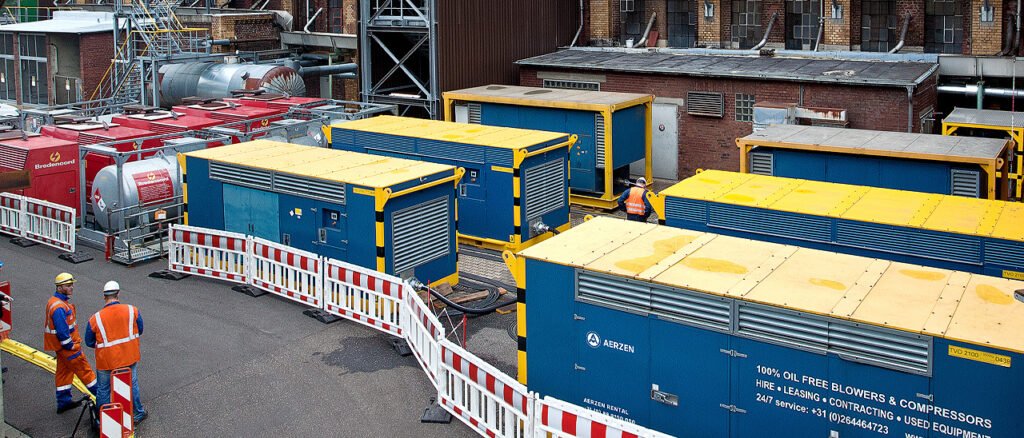
การเช่า Blower และ Compressor เพื่อรองรับการขยายกำลังการผลิต
Plant Expansion Capacity Bridge — คู่มือ Parallel Supply Strategy สำหรับวิศวกรโรงงาน
TL;DR — สรุป 3 ประเด็นหลัก
- สร้าง compressor room ใหม่ต้องใช้เวลา 6–18 เดือน แต่สายการผลิตใหม่ต้องการ process air ตั้งแต่วันแรก — rental unit คือ capacity bridge ที่เติมช่องว่างนี้โดยไม่ต้องลงทุน CAPEX ก้อนใหญ่ล่วงหน้า
- กลยุทธ์ parallel supply ต่อ rental unit เข้า header เดิมหรือ dedicated header ของส่วนขยาย ขึ้นอยู่กับ pressure drop และ pipe sizing — ต้องคำนวณ delta demand (total new demand − existing spare capacity) พร้อม safety margin 15–20%
- Phased handover จาก rental ไป permanent system ทำใน 3 ขั้น: parallel operation → load transfer → decommission โดยไม่ต้องหยุดสายการผลิต
การขยายกำลังการผลิตคือสัญญาณที่ดีสำหรับธุรกิจ แต่สำหรับวิศวกรโรงงาน มันมาพร้อมกับ
Construction Gap — ช่วงเวลาระหว่างวันที่สายการผลิตใหม่พร้อมใช้งาน
กับวันที่ compressor room ใหม่ commissioning เสร็จสมบูรณ์
โดยทั่วไปช่วงนี้ยาว 6–18 เดือน ขึ้นอยู่กับขนาดของโครงการก่อสร้าง
และไม่มีทีมผลิตไหนที่ยอมรอได้ถึงขนาดนั้น
บทความนี้ครอบคลุม parallel supply strategy, การคำนวณ delta demand,
และ phased handover plan ที่วิศวกรและทีม procurement สามารถนำไปใช้ได้ทันที —
โดยอิงกับหลักการ ISO 1217:2009
และแนวปฏิบัติ CAGI สำหรับ compressed air system design
เดือนที่ใช้สร้าง
compressor room ใหม่
เวลาจัดส่ง rental unit
ฉุกเฉิน (EEC & ภาคตะวันออก)
ลงทุนล่วงหน้า — rental model
คือ OPEX เท่าที่ใช้จริง
ปีประสบการณ์วิศวกรรม
เยอรมัน ตั้งแต่ปี 1864
1. สถานการณ์จริงที่พบในโรงงาน: Construction Gap ที่ทุกโครงการ Expansion เจอ
โครงการ plant expansion ส่วนใหญ่เดินหน้าพร้อมกัน 2 track คือ
Civil & Mechanical Construction (ตึก, สาธารณูปโภค, piping) และ
Process Line Installation (เครื่องจักรผลิต, automation, testing)
ปัญหาที่เกิดซ้ำในทุกโครงการคือ Process Line มักพร้อมก่อน
เนื่องจากเครื่องจักรผลิตสั่งซื้อล่วงหน้าและนำส่งตามกำหนด
ในขณะที่ compressor room หรือ blower station ใหม่ยังอยู่ระหว่างก่อสร้าง
ติดตั้ง, commissioning, และ load testing
สถานการณ์นี้ ต่างจาก factory relocation อย่างมีนัยสำคัญ
ในกรณี relocation โรงงานเดิมลดหรือหยุดการผลิตระหว่างย้าย
แต่ใน plant expansion โรงงานเดิม ยังเดินสายการผลิตเต็มกำลัง
ขณะที่ส่วนขยายสร้างขึ้นคู่ขนาน
Permanent compressed air system เดิมยังรองรับสายการผลิตเดิมอยู่ทั้งหมด
และไม่มี spare capacity พอสำหรับ load ใหม่
เราต้องเลือกระหว่างหยุดรอ หรือหา air supply ชั่วคราว”
— สถานการณ์ที่วิศวกรโรงงาน EEC เผชิญเป็นประจำในโครงการ brownfield expansion
ในช่วง Construction Gap นี้ ทางเลือกมีอยู่ 3 แนวทาง:
- รอให้ compressor room ใหม่เสร็จ — หมายความว่าสูญเสีย revenue opportunity ตลอดช่วง gap
- Oversize permanent system เดิมตั้งแต่แรก — ผูก CAPEX ล่วงหน้าก่อนที่จะรู้ demand จริงของสายการผลิตใหม่
- ใช้ rental unit เป็น capacity bridge — OPEX model, จัดส่งได้ใน 24 ชั่วโมง, ไม่ผูก CAPEX
2. Parallel Supply Strategy: ต่อ Rental Unit เข้า Air Header อย่างไรให้ปลอดภัย
เมื่อตัดสินใจใช้ rental unit เป็น capacity bridge
คำถามแรกที่วิศวกรต้องตอบคือ — ต่อ rental unit เข้า header เดิม
หรือติดตั้ง dedicated header สำหรับส่วนขยาย?
Option A: ต่อเข้า Existing Header (Header Integration)
เหมาะสำหรับกรณีที่ demand ใหม่ไม่สูงมากนัก และ existing header
มี pipe diameter พอเพียง รองรับ total flow ที่เพิ่มขึ้น
ต้องตรวจสอบ:
- Pressure drop ตลอด header เมื่อ flow เพิ่ม — ต้องไม่เกิน ±0.1 bar ต่อ equipment end-user
- ตำแหน่ง tie-in point — แนะนำให้อยู่ใกล้ receiver tank หรือจุดที่ pressure การแปรผันน้อย
- Check valve ที่ outlet ของ rental unit เพื่อป้องกัน backflow
- Isolation valve สำหรับ rental unit เพื่อ decommission โดยไม่กระทบสายหลัก
Option B: Dedicated Header สำหรับส่วนขยาย (Expansion Zone Header)
เหมาะสำหรับกรณีที่ส่วนขยายมี demand สูง หรือต้องการ air quality
ที่แตกต่างจากสายการผลิตเดิม (เช่น ต้องการ ISO 8573-1 Class 0 oil-free
ในขณะที่สายเดิมใช้ Class 1)
การแยก header ช่วยให้:
- ควบคุม pressure setpoint ของส่วนขยายได้อิสระ
- ไม่กระทบ pressure stability ของสายการผลิตเดิม
- ง่ายต่อการ handover เมื่อ permanent compressor room ใหม่พร้อม — เพียง re-route header ไปยัง permanent supply
ทีมวิศวกรรมของ AERZEN Rental Thailand ออกแบบ tie-in configuration
ให้สอดคล้องกับ ASME B31.3 Process Piping
และตรวจสอบ compatibility ระหว่าง rental unit outlet pressure กับ
system operating pressure ก่อนติดตั้งทุกครั้ง
บริการ site survey ไม่มีค่าใช้จ่ายเพิ่มเติมสำหรับโครงการใน EEC และภาคตะวันออก
(ฐานปฏิบัติการ Sattahip, Chonburi)
3. การ Sizing สำหรับ Capacity Bridge: คำนวณ Delta Demand ทีละขั้น
Delta demand คือปริมาณ process air ส่วนเพิ่มที่ rental unit ต้องจัดหา
การคำนวณผิดพลาดในขั้นนี้ทำให้เลือก unit ขนาดไม่พอ (production bottleneck)
หรือใหญ่เกินไป (overpay ค่าเช่า)
| ขั้นตอน | พารามิเตอร์ | แหล่งข้อมูล | ตัวอย่างค่า |
|---|---|---|---|
| 1 | Total new demand ของสายการผลิตใหม่ทั้งหมด (Nm³/h) | Equipment data sheets, process flow diagram | 1,200 Nm³/h |
| 2 | Existing permanent capacity ที่ยังมี spare (Nm³/h) | Compressor nameplate + current load survey | 400 Nm³/h |
| 3 | Delta demand = (1) − (2) | คำนวณ | 800 Nm³/h |
| 4 | Safety margin (15–20% สำหรับ demand spike ระหว่าง ramp-up) | CAGI compressed air system guidelines | +160 Nm³/h (20%) |
| 5 | Rental unit capacity target | เลือก model ที่ใกล้เคียงขึ้นไป | 960 Nm³/h → BVS หรือ DVO series |
| 6 | Operating pressure ที่ end-user ต้องการ (bar g) | Equipment spec sheet | 0.5–1.0 bar g (blower range) / 6–8 bar g (compressor range) |
| 7 | Air quality requirement (ISO 8573-1 Class) | Process specification | Class 0 (oil-free) หรือ Class 1 |
หมายเหตุด้านผลิตภัณฑ์:
สำหรับ pressure range 0.3–1.0 bar g (blower application เช่น aeration, pneumatic conveying ความดันต่ำ)
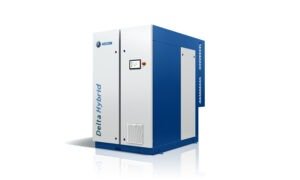
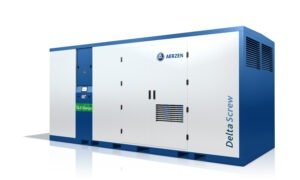
AERZEN มี BVO (Rotary Lobe Blower), BVS (Delta Screw Blower), GM (Roots blower)
และ AT (AerzenTurbo centrifugal blower) สำหรับ flow rate สูง
สำหรับ pressure range 4–15 bar g (instrument air, process air ความดันสูง)
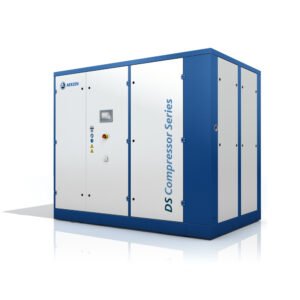
AERZEN มี TVO (oil-free screw compressor) และ VMW (water-injected screw compressor)
การเลือก series ขึ้นอยู่กับ pressure, flow, และ air quality requirement ของแต่ละ application
ทีมวิศวกรรม AERZEN ช่วย specify ได้โดยไม่มีค่าใช้จ่าย
4. Transition Plan: Phased Handover จาก Rental ไป Permanent
ขั้นตอนที่วิศวกรหลายคนมองข้ามคือ การวางแผน handover
ตั้งแต่ต้นโครงการ — ก่อนที่จะติดตั้ง rental unit
การวางแผนล่วงหน้าทำให้ transition เป็นไปอย่างราบรื่น
โดยไม่ต้องหยุดสายการผลิต
- Phase 1 — Parallel Operation (สัปดาห์ที่ 1–4 หลัง permanent commissioning)
Rental unit และ permanent system ใหม่ทำงานพร้อมกัน
ช่วงนี้ใช้สำหรับ load verification ว่า permanent system รับ full design load ได้จริง
Monitor pressure, flow, temperature, และ vibration ของ permanent system อย่างต่อเนื่อง
ตาม acceptance criteria ที่กำหนดในสัญญา commissioning - Phase 2 — Load Transfer (สัปดาห์ที่ 3–6)
ค่อยๆ โอน load จาก rental unit ไป permanent system
โดยปรับ pressure setpoint ของ rental unit ลงทีละ 0.05–0.1 bar
ทำให้ permanent system รับ load เพิ่มขึ้นตามลำดับ
ทีม AERZEN ดูแล load transfer procedure เพื่อให้แน่ใจว่า
ไม่มี pressure sag ที่ end-user - Phase 3 — Rental Decommission (หลัง load transfer ยืนยันสำเร็จ)
ปิด isolation valve ของ rental unit, ตรวจสอบ system pressure stability
เป็นเวลา 24–72 ชั่วโมง ก่อน AERZEN เข้าถอด rental unit
และนำกลับ ไม่มีค่าใช้จ่าย decommission เพิ่มเติม
(ค่า re-mobilization รวมอยู่ใน rental agreement แล้ว)
transition จาก rental ไป permanent system — นี่คือสิ่งที่วิศวกรโรงงานต้องการ
และที่ AERZEN ออกแบบ service model มาเพื่อรองรับโดยตรง”
— AERZEN Application Engineering Team, AERZEN Rental Thailand
5. ข้อดีของ Rental ในช่วง Expansion: ไม่ผูก CAPEX ก่อนที่จะรู้ Demand จริง
หนึ่งในความเสี่ยงที่ซ่อนอยู่ในโครงการ plant expansion คือ
uncertainty ของ production demand
แผนผลิตที่วางไว้กับ demand จริงในปีแรกของ operation
มักแตกต่างกัน 20–40%
ไม่ว่าจะเป็น market demand ที่ขยายช้ากว่าแผน,
product mix ที่เปลี่ยนไป, หรือ ramp-up ที่ใช้เวลานานกว่าคาด
| ปัจจัย | Oversized Permanent (ซื้อล่วงหน้า) | Rental Bridge |
|---|---|---|
| CAPEX ล่วงหน้า | สูง — ผูกเงินก่อน demand ยืนยัน | ไม่มี — OPEX เท่าที่ใช้จริง |
| ความยืดหยุ่น | ต่ำ — ปรับ capacity ยาก | สูง — เพิ่ม/ลด unit ได้ตาม demand |
| Demand uncertainty | รับความเสี่ยงเองทั้งหมด | โอน demand risk ออกจากงบลงทุน |
| Time to first air | 6–18 เดือน (รอ construction) | 24 ชั่วโมง (EEC / ภาคตะวันออก) |
| Maintenance responsibility | ทีมของโรงงาน (ต้องมี engineer + spare parts) | AERZEN รับผิดชอบทั้งหมด (all-inclusive) |
| สอดคล้อง TFRS 16 (short-term) | N/A — Capital asset | เช่าไม่เกิน 12 เดือน = Operating expense ตรง (ไม่ต้อง ROU asset) |
ข้อดีด้าน financial flexibility ของ rental ในช่วง expansion
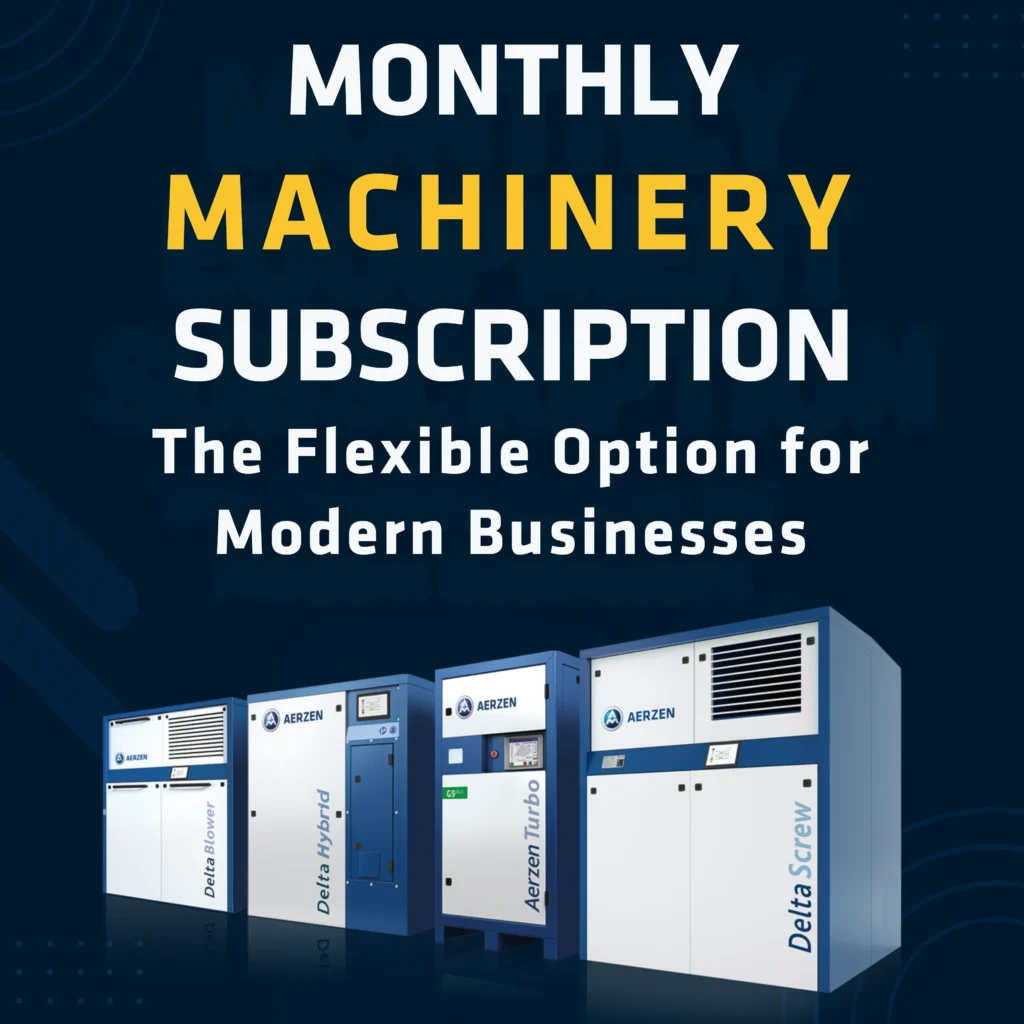
ยังสอดคล้องกับหลักการ Subscription Plan ของ AERZEN
ที่รวม maintenance, spare parts, และ technical support ไว้ใน OPEX รายเดือนเดียว
ดูรายละเอียดเพิ่มเติมที่
Subscription Plan All-Inclusive
และ คู่มือ Rent vs. Buy: TCO Analysis
สำหรับโรงงานที่อยู่ในเขต EEC, Map Ta Phut, Amata Nakorn, หรือนิคมอุตสาหกรรมอื่นใน
ภาคตะวันออกของไทย AERZEN Rental Thailand มีฐานปฏิบัติการที่ Sattahip, Chonburi
พร้อมส่งมอบ rental unit และทีมวิศวกรรมได้ใน 24 ชั่วโมง สำหรับกรณีฉุกเฉิน
(ดูเพิ่มเติม: Emergency Blower Rental 24h Thailand)
6. คำถามที่พบบ่อย (FAQ)
ควรต่อ rental unit เข้า header เดิมหรือติดตั้ง dedicated header สำหรับส่วนขยาย?
ขึ้นอยู่กับ pressure differential และ pipe sizing ของ header เดิม
หาก header เดิมออกแบบพอดีกับ permanent capacity เดิม
การต่อ rental unit เข้าโดยตรงอาจทำให้ header pressure drop เกิน spec ของ equipment เดิม
วิธีที่ปลอดภัยกว่าคือติดตั้ง dedicated header สำหรับ expansion zone
แล้วใช้ tie-in valve หรือ check valve กั้น
เพื่อให้ทั้งสองระบบทำงานแบบ parallel โดยไม่รบกวนกัน
ทีมวิศวกรรม AERZEN ช่วยประเมิน header sizing และออกแบบจุด tie-in ก่อนติดตั้งได้โดยไม่มีค่าใช้จ่าย
Delta demand คืออะไร และคำนวณอย่างไร?
Delta demand คือปริมาณ compressed air หรือ process air ส่วนเพิ่มที่สายการผลิตใหม่ต้องการ
คำนวณโดย: Delta demand = Total new demand (Nm³/h) − Existing permanent spare capacity (Nm³/h)
ตัวอย่าง: สายการผลิตใหม่ต้องการ 1,200 Nm³/h, permanent system มี spare capacity 400 Nm³/h
→ Delta demand = 800 Nm³/h
แนะนำให้เผื่อ safety margin 15–20% เพื่อรองรับ demand spike ระหว่าง production ramp-up
Phased handover จาก rental ไป permanent ทำอย่างไร?
Phased handover ทำใน 3 ขั้นตอน:
(1) Parallel operation — rental unit และ permanent system ทำงานพร้อมกัน 2–4 สัปดาห์เพื่อ verify performance;
(2) Load transfer — ค่อยๆ โอน load จาก rental ไป permanent โดยปรับ pressure setpoint ทีละน้อย;
(3) Rental decommission — ถอด rental unit หลังยืนยันว่า permanent system รับ load ได้ครบ
ทีม AERZEN ดูแล decommission และนำ unit กลับโดยไม่มีค่าใช้จ่ายเพิ่ม
การขยายโรงงานต่างจาก factory relocation อย่างไรในแง่ความต้องการ rental?
Plant expansion bridge คือสถานการณ์ที่โรงงานเดิมยังเดินการผลิตปกติ
ขณะที่ส่วนขยายสร้างใหม่คู่ขนาน
ความต้องการ rental เกิดจาก time gap ระหว่างวันที่สายการผลิตใหม่พร้อม
กับวันที่ compressor room ใหม่ commissioning เสร็จ
ส่วน factory relocation (การย้ายโรงงาน) โรงงานเดิมหยุดหรือลด production ลงระหว่างย้าย
ความต้องการ rental มักเป็น standby supply ระหว่างที่ permanent system
ยังไม่พร้อมในสถานที่ใหม่ — มี risk profile และ contract duration ต่างกัน
AERZEN Rental Thailand ครอบคลุมพื้นที่ใดบ้าง?
AERZEN Rental Thailand มีฐานปฏิบัติการที่ Sattahip, Chonburi (36/60 Phlu Ta Luang, Sattahip District, Chon Buri 20180)
ครอบคลุมการส่งมอบและให้บริการทั่วประเทศไทย
โดยเฉพาะเขต EEC, Map Ta Phut, ระยอง, ชลบุรี, ฉะเชิงเทรา, และนิคมอุตสาหกรรมภาคตะวันออก
สำหรับโรงงานในกรุงเทพฯ ภาคกลาง และภาคอื่นๆ ทีมงานสามารถประเมินระยะเวลา mobilization ได้ตามพื้นที่จริง
อ้างอิงและแหล่งข้อมูลเพิ่มเติม
-
ISO 1217:2009 — Displacement compressors: Acceptance tests
— มาตรฐาน acceptance test สำหรับ displacement compressor -
CAGI — Compressed Air Energy Efficiency Resources
— แนวปฏิบัติ sizing และ capacity planning สำหรับ compressed air system -
ASME B31.3 — Process Piping
— มาตรฐาน piping design สำหรับ industrial process systems -
AERZEN Group — Products: Blowers and Compressors
— ข้อมูลเทคนิคจาก Aerzener Maschinenfabrik GmbH (HQ, Germany) -
AERZEN Rental Thailand — เกี่ยวกับเรา & ทีมวิศวกรรม
— ทีมวิศวกรประยุกต์และฐานปฏิบัติการ Sattahip, Chonburi
พร้อมวางแผน Capacity Bridge สำหรับโครงการ Plant Expansion ของคุณ?
ทีมวิศวกรรม AERZEN Rental Thailand พร้อมช่วย size rental unit,
ออกแบบ tie-in point, และวางแผน phased handover ให้กับโครงการของคุณ
โดยไม่มีค่าใช้จ่าย site survey สำหรับโรงงานในเขต EEC และภาคตะวันออก
Rent a solution. Expect performance.
ตรวจสอบทางเทคนิคโดย: AERZEN Application Engineering Team, Sattahip, Chonburi · Last technical review: 2026-06-01