บทความโดยภราดร วรรณสังข์ (Paradorn Wannasung)Marketing Communication Specialist · นิเทศศาสตรมหาบัณฑิต (การสื่อสารการตลาดและแบรนด์)
นิเทศศาสตรมหาบัณฑิต (การสื่อสารการตลาดและแบรนด์) · AERZEN Rental Thailand

AERZEN ออกแบบและผลิต blower มาตั้งแต่ปี 1864 — และจากประสบการณ์กว่า 160 ปีนั้น บทเรียนที่ซ้ำกันมากที่สุดคือ: เครื่องจักรที่ดีที่สุดก็ส่งมอบผลลัพธ์ที่แย่ได้ ถ้าระบบท่อที่เชื่อมต่อออกแบบไม่ถูกต้อง. Compressed air piping คือ “เส้นเลือด” ของโรงงาน — ถ้า layout ผิด, pipe size เล็กเกินไป หรือวัสดุท่อก่อ contamination คุณจะจ่ายค่าพลังงานสูงกว่าที่ควร สูญเสีย production quality และอาจล้มเหลวการตรวจสอบ ISO compliance ไปพร้อมกัน.
บทความนี้เป็น engineering guide สำหรับ Plant Engineer และ Utilities Manager ที่กำลังวางแผนติดตั้งหรืออัปเกรดระบบลมอัด — ครอบคลุมตั้งแต่ system architecture, การเลือก layout, การคำนวณ pressure drop, ไปจนถึงตัวอย่างการวาง piping สำหรับการเช่า blower แบบ N+1 standby.
ระบบ compressed air ในโรงงานอุตสาหกรรมประกอบด้วย 4 stage หลักที่ทำงานต่อเนื่องกัน การออกแบบ piping จะมีผลต่างกันในแต่ละ stage:
แผนภาพแสดง flow path ของลมอัดจาก generation ไปยัง point-of-use — pressure drop สะสมในทุก stage
Pressure drop budget สำหรับระบบที่ดีคือ ไม่เกิน 0.3–0.5 bar รวมทั้งระบบ (Stage 2–4). ถ้า compressor ปล่อย 7 bar(g) แต่ point-of-use ได้รับ 6.3 bar(g) แสดงว่า piping กินพลังงานประมาณ 4–5% โดยไม่มีประโยชน์. ใน ASME compressed air system guide มาตรฐาน maximum allowable pressure drop อยู่ที่ 10% ของ system operating pressure.
การเลือก layout ของ distribution piping เป็นหนึ่งในการตัดสินใจออกแบบที่มีผลระยะยาวมากที่สุด เพราะแก้ไขภายหลังมีค่าใช้จ่ายสูงมาก. มีสอง layout หลักในโรงงานอุตสาหกรรม:
ท่อหลักวนรอบโรงงานเป็นวง ทุก drop leg เชื่อมเข้า loop เดียวกัน
ท่อหลักวิ่งตรงจาก generation ไปยัง sub-branches แบบต้นไม้
Ring main แนะนำเมื่อ: โรงงานมีพื้นที่ > 800 m², load points > 5 จุด, หรือต้องการ redundancy. Branch header เหมาะเมื่อ: โรงงานเป็น linear layout (เช่น conveyor line เดียว), load < 3 จุด, หรือเป็น temporary installation ระยะสั้น.
สมการ Darcy-Weisbach เป็น standard ที่ใช้กันทั้งใน ISO 5167, ASME compressed air guidelines และ Compressed Air and Gas Institute (CAGI) — คำนวณ pressure drop ตลอดความยาวท่อตรงได้อย่างแม่นยำ:
ΔP = f × (L / D) × (ρ × v² / 2)
ก่อนเลือก pipe size ต้องกำหนด target velocity ก่อน เพราะ velocity กำหนด turbulence และ pressure drop:
| ส่วนของระบบ | Recommended Velocity | เหตุผล |
|---|---|---|
| Main header / Ring main | 6–9 m/s | ลด friction loss; รักษา pressure สม่ำเสมอ |
| Sub-mains / Branch headers | 6–9 m/s | เช่นเดียวกับ main header |
| Drop legs (vertical runs to equipment) | ≤ 15 m/s | ป้องกัน turbulence + moisture carryover |
| สาย flexible hose / equipment inlet | ≤ 20 m/s | Equipment manufacturer specification |
| Reference: CAGI Best Practices for Compressed Air Systems, Compressed Air Challenge (CAC) Guidelines, ASME B31.3 | ||
ตารางด้านล่างเป็น synthetic reference table สำหรับการประมาณ pipe size เบื้องต้น คำนวณจากสมการ Darcy-Weisbach โดยกำหนด velocity ≤ 8 m/s และ friction factor f = 0.02 (turbulent flow, steel pipe). ค่าเหล่านี้เป็น starting point — การออกแบบจริงต้องคำนวณตาม actual layout, fitting equivalent lengths, และ system resistance curve.
| Nominal Size | Internal Diameter (mm) | Max Flow ที่ 7 bar(g) (m³/min FAD) | Typical Application | ΔP/100m ที่ Max Flow (approx.) |
|---|---|---|---|---|
| DN 25 (1″) | 26.7 mm | 0.5–0.8 | Drop leg, individual equipment | ~0.12 bar |
| DN 32 (1¼”) | 35.1 mm | 0.9–1.5 | Drop leg, small sub-branch | ~0.10 bar |
| DN 40 (1½”) | 40.9 mm | 1.5–2.5 | Sub-branch, short main header | ~0.09 bar |
| DN 50 (2″) | 52.5 mm | 2.5–4.5 | Main header สำหรับโรงงานขนาดเล็ก | ~0.08 bar |
| DN 65 (2½”) | 62.7 mm | 4.5–7.0 | Main header โรงงานกลาง, ring main | ~0.07 bar |
| DN 80 (3″) | 77.9 mm | 7.0–12.0 | Main header โรงงานใหญ่, multi-unit ring main | ~0.06 bar |
| Synthetic reference — คำนวณจาก Darcy-Weisbach, ρ = 9.3 kg/m³ ที่ 7 bar(g), v = 8 m/s, f = 0.02. ΔP/100m เป็นค่าประมาณสำหรับ straight pipe เท่านั้น (ไม่รวม fittings / bends / valves). การออกแบบจริงต้องใช้ system curve calculation และ pipe flow software. Reference หลัก: CAGI Compressed Air System Guide; CAC Best Practices Manual. | ||||
ในระบบจริง fittings (elbow, tee, valve, reducer) เพิ่ม equivalent length ให้ระบบอย่างมีนัยสำคัญ: elbow 90° เทียบเท่าท่อตรง 20–40D; gate valve เปิดเต็ม ~8D; ball valve เปิดเต็ม ~3D. นักออกแบบที่มีประสบการณ์มักบวก 25–40% เผื่อสำหรับ fittings บน estimated pipe length ก่อนเลือก pipe size.
Air receiver ทำหน้าที่ 3 อย่างในระบบลมอัด: buffer เพื่อรองรับ peak demand, dampener เพื่อลด pressure pulsation จาก compressor/blower, และ moisture separator เบื้องต้นก่อนเข้าชุด treatment. การ size receiver ผิดทำให้เครื่องเปิด-ปิดถี่เกินไป (ลด motor life) หรือ pressure drop ระหว่าง peak demand สูงเกินกำหนด.
V = (Qpeak × ΔT) / ΔP
Reference: ISO 1217 Displacement Compressors; Compressed Air Challenge Best Practices Manual §4.2
โรงงาน Food & Beverage ต้องการ buffer 10 นาทีในกรณี blower rental unit หยุดชั่วคราวเพื่อ maintenance โดยที่ production line ยังทำงานต่อได้. ข้อมูล:
V = (0.058 × 600) / 100,000 × 100,000
หรือในหน่วยที่อ่านง่ายกว่า:
V = (Q × ΔT × Patm) / ΔP
V = (3.5 m³/min × 10 min × 1.013 bar) / 1 bar = 35.5 m³
สำหรับ buffer 10 นาทีโดยไม่มี backup supply ต้องการ receiver ขนาดประมาณ 35–40 m³. ในทางปฏิบัติ receiver ขนาดใหญ่เช่นนี้มักจับคู่กับ N+1 standby blower rental แทน — เพราะ standby unit ขนาด 2–5 m³/min ราคาเช่าต่อวันถูกกว่าการลงทุน receiver 40 m³ และ maintain pressure ได้ต่อเนื่องโดยไม่มี time limit.
วัสดุท่อมีผลโดยตรงต่อ ISO 8573-1 Class 0 compliance เพราะท่อที่ก่อ contamination จะทำให้อากาศที่ผ่าน filter ชั้นดีมา contaminated อีกครั้งก่อนถึง point-of-use.
| วัสดุท่อ | Class 0 Compatible? | ข้อได้เปรียบ | ข้อจำกัด | Typical Use Case |
|---|---|---|---|---|
| Galvanized Steel | ไม่แนะนำสำหรับ Class 0 | ราคาถูก, หาได้ง่าย | สนิมภายใน + zinc flaking ปนเปื้อนอากาศ; ไม่ผ่าน Class 0 ในระยะยาว | General utility air (non-critical) เท่านั้น |
| Carbon Steel (ไม่มี coating) | ไม่แนะนำ | ราคาต่ำ, แข็งแรง | สนิมรุนแรงในสภาพ humidity สูง; ปนเปื้อน oil + particulate | ไม่เหมาะกับ compressed air distribution |
| Stainless Steel 304/316 | รองรับ Class 0 | ไม่มีสนิม; ทนทานสูง; เหมาะ clean room | ราคาสูง; ต้องใช้ช่างเชื่อมที่มีประสบการณ์; หนักกว่า | Electronics, Food export — Class 0 mandatory |
| Aluminum Composite (เช่น Transair, Prevost) | รองรับ Class 0 | น้ำหนักเบา; ต่อได้เร็ว; ไม่มีสนิม; bore เรียบ ลด friction | ราคาสูงกว่า carbon steel; แรงดันจำกัด (ส่วนมาก ≤ 16 bar); ต้องใช้ fitting ของ system นั้น | F&B, electronics — เหมาะกับ rental installation ที่ต้องรื้อถอนได้ |
| Copper | รองรับ Class 0 | ทนทาน; bore เรียบ; ไม่ก่อสนิม | ราคาสูง; ต้องใช้ brazed joint ที่มีฝีมือ; ราคาทองแดงผันผวน | instrument air — ใช้น้อยลงเนื่องจาก aluminum composite แข่งได้ |
| Class 0 compatibility ตาม ISO 8573-1:2010 — ท่อที่ก่อ particulate contamination (สนิม, zinc flakes) หรือ oil contamination (coating breakdown) จะทำให้ air quality ต่ำกว่า Class 1 แม้จะมี downstream filter ที่ดีที่สุด เพราะ re-contamination เกิดหลัง filtration stage. | ||||
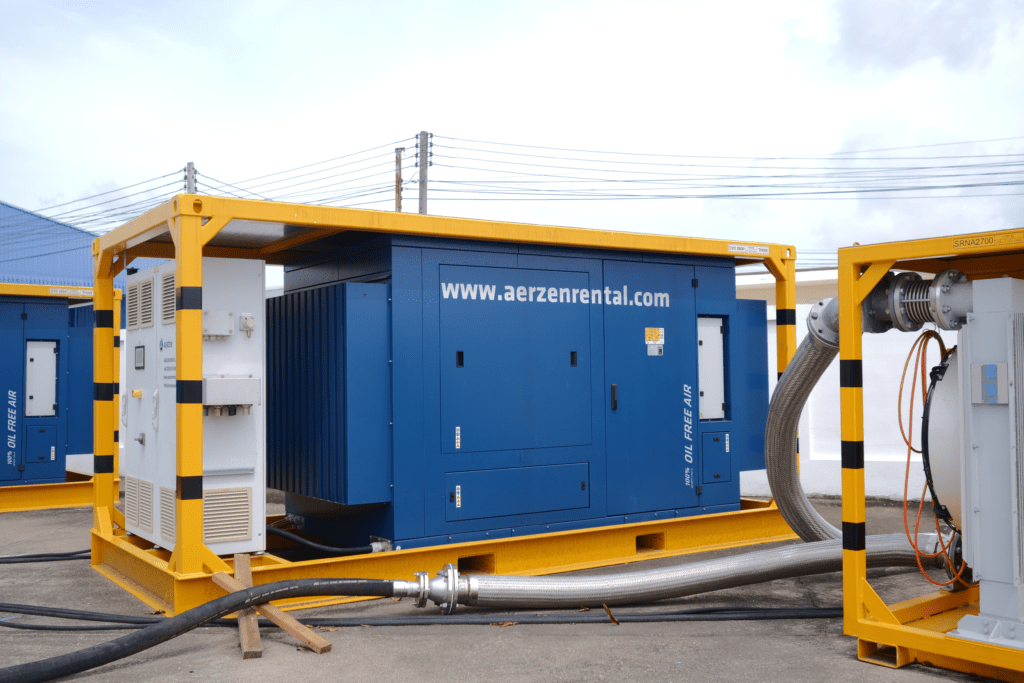
สถานการณ์: โรงงานบรรจุอาหารใน EEC ต้องการ oil-free compressed air สำหรับ pneumatic conveying และ packaging machinery. Production ทำงาน 24 ชั่วโมง ห้ามหยุดสายเกิน 5 นาทีโดยไม่แจ้งล่วงหน้า. เช่า AERZEN BVO blower 2 ตัวแบบ active + 1 ตัว standby.
ISO 8573-1 Class 0 กำหนด total oil content < 0.01 mg/m³ และ particle count ที่ strict กว่า Class 1 มาก. Galvanized steel pipe มีปัญหา 2 ระดับ: (1) zinc coating ภายในสึกหรอและปนเปื้อนเป็น particulate หมวด solid contaminant; (2) ในสภาพที่มี moisture, corrosion เกิดและผลิต iron oxide particulate ที่ downstream filter ไม่สามารถจับได้ทั้งหมดถ้าไม่มี terminal filter ตรงหน้า equipment.
สำหรับ food & beverage (ผลิตภัณฑ์ส่งออก), และ electronics manufacturing — stainless steel 304/316 หรือ aluminum composite เป็น minimum requirement. ใน general manufacturing ที่ไม่มี product contact compressed air สามารถพิจารณา Class 1 ซึ่ง galvanized steel อาจผ่านได้ถ้ามี downstream filter ที่เหมาะสม. แต่ถ้าเป้าหมายคือ Class 0 คำตอบคือ ไม่ใช้ galvanized.
ใช้สูตร V = (Q × ΔT × Patm) / ΔP. ตัวอย่าง: Q = 3.5 m³/min, ΔT = 10 นาที, ΔP = 1 bar (จาก 7 bar(g) ลงมา 6 bar(g)) → V ≈ 35 m³. Receiver ขนาดนี้ใหญ่มากและราคาสูง.
ในทางปฏิบัติ emergency buffer 10 นาทีโดยไม่มี backup มักทำไม่ได้ด้วย receiver อย่างเดียวสำหรับโรงงานที่มี demand > 1 m³/min. ทางเลือกที่ cost-effective กว่าคือ เช่า blower แบบ N+1 standby ซึ่ง switchover time เพียง 30 วินาที ต้องการ buffer เพียง 2–3 m³ เท่านั้น และ downtime จริงเป็นศูนย์.
Ring main ต้องเป็น closed loop ครบวงจรจึงจะได้ประโยชน์ full bi-directional flow. การวน loop ไม่ครบ 360° ทำให้สาย “dead-end” ขึ้นมา ซึ่งพฤติกรรม hydraulic ใกล้เคียงกับ branch header มากกว่า ring main. อย่างไรก็ตาม หากพื้นที่โรงงานเป็นรูปตัว L หรือ T สามารถออกแบบให้ loop ผ่านทุก wing ได้ โดยที่ closure point อาจอยู่ตรง utility corridor แทนที่จะเป็น perimeter ตรงๆ. สำคัญคือ ต้องมี isolation valve ทุก 20–30 m เพื่อให้ส่วน segment ใดก็ตามสามารถ isolate ได้โดยไม่หยุดระบบทั้งหมด.
Standard practice คือต่อ drop leg จาก ด้านบน (top tap) ของ ring main เสมอ เพราะช่วยป้องกัน condensate และ particulate ที่ตกตะกอนที่ก้นท่อถูกพัดเข้า drop leg. ต่อจาก side tap ได้เช่นกันถ้าออกแบบมาอย่างถูกต้อง แต่ bottom tap ห้ามใช้เด็ดขาด นอกจากจุด drain. นอกจากนี้ ทุก drop leg ควรมี drain trap หรือ condensate separator ที่จุดต่ำสุดก่อนเข้า equipment.
ขึ้นอยู่กับ design ของระบบเดิม. ถ้าระบบเดิมมี isolation valve และ inlet/outlet manifold สำหรับ future unit (best practice) สามารถต่อ rental unit เข้าได้ภายใน 2–4 ชั่วโมง. ถ้าไม่มี ต้องเพิ่ม tee fitting และ isolation valve บน main header ซึ่งอาจต้องหยุดระบบชั่วคราว 30–60 นาที. AERZEN Rental Thailand มีทีม application engineering ที่ประเมิน tie-in point ให้ฟรีก่อนการส่งมอบ unit — ติดต่อได้ที่ 098-323-2626 หรือ thai@aerzenrental.com.
มีหลายทางเลือกก่อนตัดสินใจ repiping ทั้งระบบ: (1) เพิ่ม pressure setpoint ที่ compressor 0.5–1 bar ให้ compensate pressure drop — วิธีนี้แก้อาการแต่กิน energy มากขึ้น; (2) ขนาน pipe เพิ่ม เฉพาะส่วนที่มี pressure drop สูงสุด (มักเป็น main header); (3) ตรวจหา leaks — leak rate 10% ของระบบทำให้ effective pipe capacity ลดลงอย่างมีนัยสำคัญ (CAGI ประมาณว่าโรงงานส่วนใหญ่สูญเสีย 20–30% ผ่าน leaks); (4) ลด cycle time ของ equipment เพื่อลด peak demand. วิธีถาวรที่ cost-effective มากคือ leak audit + repair ก่อนพิจารณา repiping.
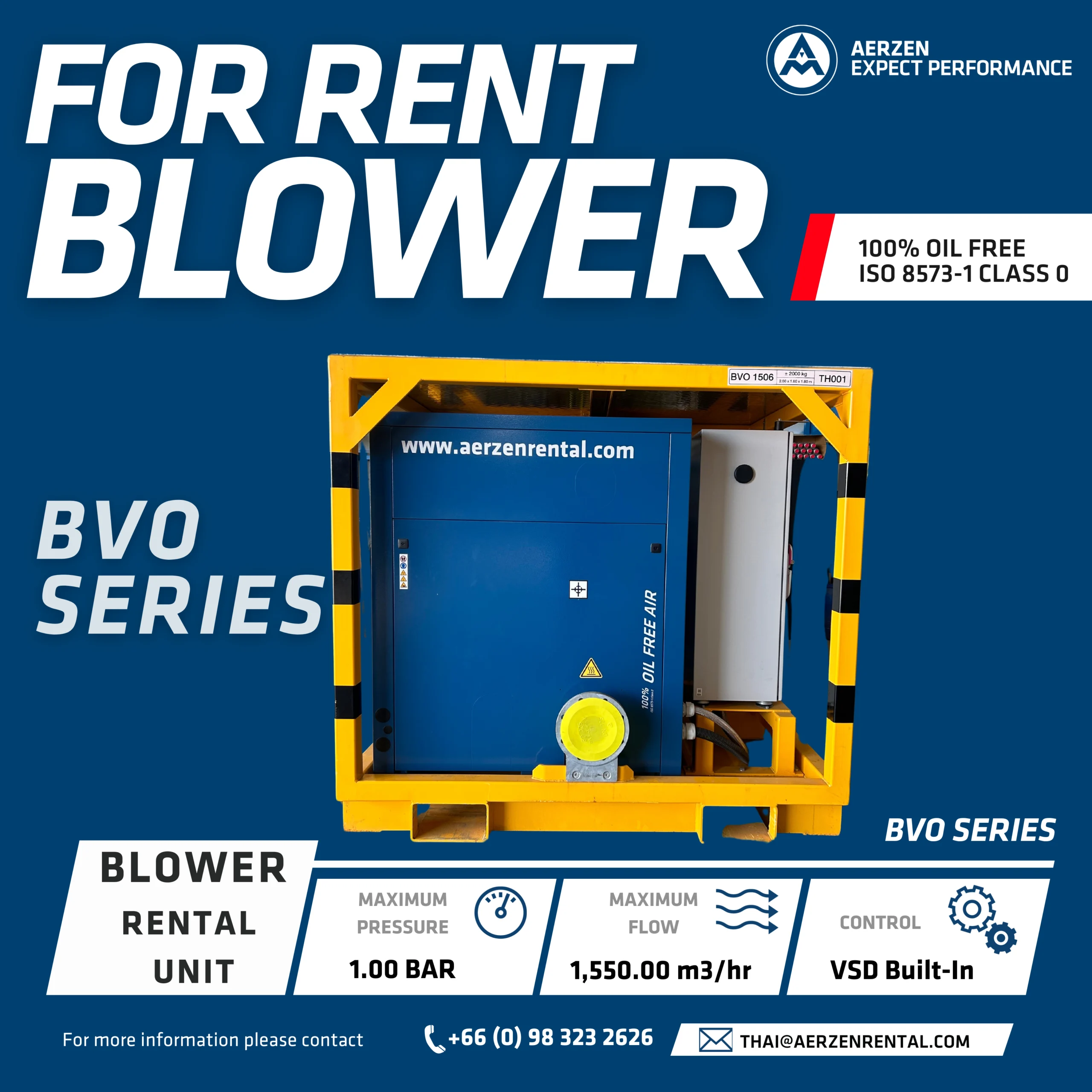
BVO คือ rotary lobe blower (positive displacement) เหมาะกับ low-to-medium pressure applications (0.3–1.0 bar(g) differential) เช่น wastewater aeration, pneumatic conveying, และ industrial process air. Discharge pulsation ของ positive displacement machine สูงกว่า — ต้องมี pulsation dampener และ receiver ที่เหมาะสมบน discharge piping.
TVO คือ oil-free screw compressor (positive displacement, twin-screw) เหมาะกับ medium-to-high pressure (5–13 bar(g)) เช่น plant instrument air, pneumatic tools, และ high-pressure process. Pulsation ต่ำกว่า BVO แต่ discharge temperature สูงกว่า — after-cooler และ moisture separator จำเป็นบน piping ก่อนเข้า treatment train. ดู Products & Services สำหรับสเปคแต่ละ series.
ทีม Application Engineering ของ AERZEN Rental Thailand พร้อมประเมิน pipe sizing, layout, และ system pressure drop ให้กับโรงงานคุณ — ก่อนตัดสินใจเช่าหรือติดตั้ง ไม่มีค่าใช้จ่าย
“Rent a solution. Expect performance.”
Last technical review: 2026-06-01

ภราดร วรรณสังข์ (Paradorn Wannasung)
Marketing Communication Specialist · นิเทศศาสตรมหาบัณฑิต (การสื่อสารการตลาดและแบรนด์)
ภราดร (Paradorn) เป็นผู้ดูแลด้านการสื่อสารการตลาดของ AERZEN Rental Thailand จบนิเทศศาสตรมหาบัณฑิต (การสื่อสารการตลาดและแบรนด์) เชี่ยวชาญด้านอุตสาหกรรม B2B ในประเทศไทย มีประสบการณ์การสร้างแบรนด์และคอนเทนต์ในกลุ่มอุตสาหกรรมของไทย
ติดต่อ: pwa@aerzenrental.com · LinkedIn