
Introduction: The Financial Question Behind the Equipment Decision
As AERZEN has understood since its founding in 1864, acquiring the right compressed air equipment is both an engineering and a financial decision. For CFOs and Finance Directors in manufacturing, that decision now carries an additional layer of complexity: IFRS 16 — Leases, the international accounting standard that fundamentally changed how lease arrangements appear on financial statements.
This article examines how IFRS 16 applies to industrial blower and compressor rental agreements, what it means for the OPEX-versus-CAPEX framing, and why an operating-lease structure for compressed air equipment may align with both operational and financial objectives for many manufacturing firms in Thailand and across ASEAN.
Disclaimer: This article provides general financial information for reference purposes. It is not a substitute for advice from a qualified accountant or auditor. Application of IFRS 16 depends on the specific terms of each contract and your organization’s accounting policies. Consult your finance team or auditor before making classification decisions.
IFRS 16 in Brief: What Changed and Why It Matters
Prior to IFRS 16 (effective for annual periods beginning on or after 1 January 2019), operating leases were “off-balance-sheet” — companies disclosed lease commitments in notes to financial statements but did not recognize a liability on the balance sheet. The old IAS 17 framework allowed companies to keep significant lease obligations invisible to casual readers of financial statements.
IFRS 16 eliminated this distinction for lessees. Under IFRS 16, virtually all leases (with limited exemptions) now require lessees to:
- Recognize a right-of-use (ROU) asset on the balance sheet representing the right to use the underlying asset during the lease term
- Recognize a corresponding lease liability representing the obligation to make future lease payments
This has meaningful implications for financial ratios including Debt-to-Equity, Return on Assets (ROA), and EBITDA. Reference: IFRS Foundation — IFRS 16 Leases
The Two Key Exemptions: Where Short-Term and Low-Value Leases Remain OPEX
IFRS 16 provides two practical expedients that, when applicable, allow lease payments to be recognized as an expense on a straight-line basis — effectively maintaining OPEX treatment:
Exemption 1: Short-Term Leases (Lease Term ≤ 12 Months)
If the lease term at commencement is 12 months or fewer, the lessee may elect not to apply IFRS 16’s recognition requirements. This is an accounting policy election, typically applied by class of underlying asset.
Implication for compressed air rental: Short-term blower or compressor rental agreements (typically used for planned shutdowns, seasonal demand, or project-based requirements) may qualify for this exemption if structured as month-to-month or for defined periods of 12 months or fewer. The rental payments are then recognized as an operating expense — preserving the OPEX classification that many finance teams prefer.
Exemption 2: Low-Value Leases (Underlying Asset Value ≤ USD 5,000 when new)
For assets with a value below approximately USD 5,000 when new, IFRS 16 also permits OPEX treatment. Industrial blowers and compressors in AERZEN’s rental portfolio typically exceed this threshold, so this exemption generally does not apply.
When IFRS 16 Does Apply: Managing the Balance Sheet Impact
For longer-term equipment rentals that do not qualify for the short-term exemption, IFRS 16 requires on-balance-sheet recognition. For finance teams evaluating compressed air rental, this raises two practical questions:
Question 1: How Is the ROU Asset and Lease Liability Calculated?
The lease liability is measured at the present value of future lease payments, discounted at the lessee’s incremental borrowing rate (IBR) — the rate at which the company could borrow funds to purchase an equivalent asset.
The ROU asset equals the initial lease liability plus initial direct costs plus prepaid lease payments (less any lease incentives received).
Question 2: What Is the P&L Impact vs. CAPEX Ownership?
Under IFRS 16, instead of a single “lease expense” line:
- Depreciation of the ROU asset hits operating profit (EBIT)
- Interest expense on the lease liability hits financing cost below EBIT
This increases EBITDA relative to a simple OPEX lease presentation — because depreciation and interest replace what was previously a single operating lease expense. This is a key financial ratio effect: EBITDA margins appear higher under IFRS 16, which can be favorable for companies with EBITDA-based covenants.
OPEX vs CAPEX: The Structured Comparison for Compressed Air
| Dimension | CAPEX (Outright Purchase) | CAPEX-Like Rental (IFRS 16 on-balance-sheet) | OPEX Rental (Short-term / IFRS 16 exempt) |
|---|---|---|---|
| Balance sheet impact | Asset + depreciation; no liability | ROU Asset + Lease Liability | None (off-balance-sheet) |
| Initial cash outflow | Large upfront payment | Spread over term | Spread over term |
| EBITDA effect | Improves (depreciation below EBIT) | Improves (dep. + interest below EBITDA) | Neutral (expense in EBITDA) |
| Debt-to-Equity ratio | Worsens (if financed by debt) | Worsens (lease liability added) | Unaffected |
| Flexibility | Low — asset on books until disposed | Medium — commit to lease term | High — exit at term end |
| Maintenance cost | Owner bears full risk | Depends on contract | Rental provider bears risk (all-inclusive) |
| Technology obsolescence | Owner bears risk | Owner bears risk at term end | Rental provider manages refresh |
| Working capital | Tied up in asset | Partially tied up | Preserved |
The All-Inclusive Rental Model: Engineering and Financial Benefits Together
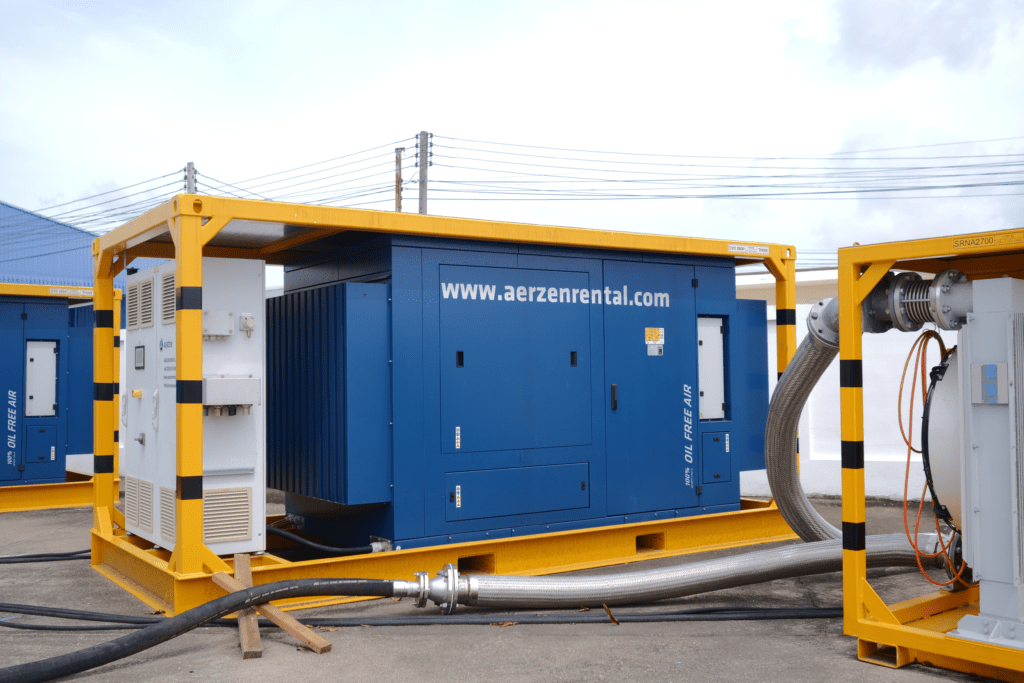
AERZEN Rental Thailand’s Subscription Plan is structured as an all-inclusive service agreement covering:
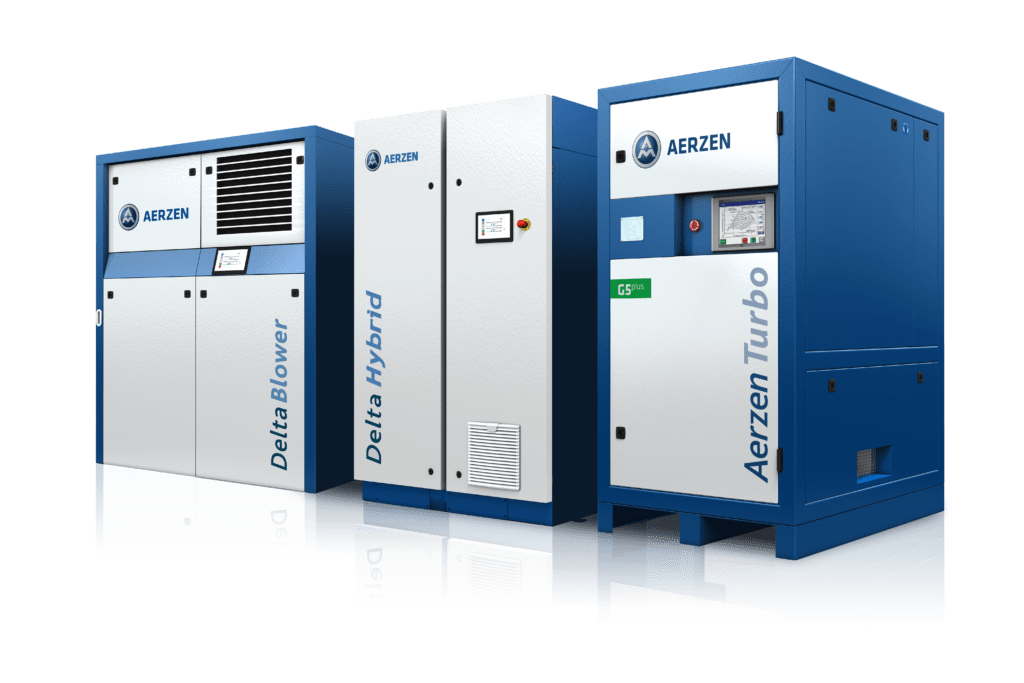
- Machine supply (DVO, BVO, BVS, GM Series, or Delta Hybrid, depending on application)
- Installation and commissioning by AERZEN-trained engineers
- Preventive maintenance (PM) at defined intervals
- Spare parts and consumables
- 24/7 technical support and breakdown response
- Equipment replacement/upgrade options at renewal
From a finance perspective, this model converts a significant CAPEX item into a predictable periodic service payment. The key questions for lease classification under IFRS 16 are:
- Does the customer control the asset? — In a well-structured rental service agreement, AERZEN retains substitution rights and operational control, supporting operating lease classification.
- Does the customer obtain substantially all economic benefits? — The machine’s output (compressed air) goes to the customer; the machine itself remains AERZEN’s asset.
- What is the lease term? — Short-term structured agreements may qualify for the 12-month exemption.
Finance teams should review the specific contract terms with their auditor to determine the applicable IFRS 16 treatment for their situation.
Case Reference: IFRS 16 in the Context of Thai-Listed Manufacturing (illustrative example)
A mid-sized manufacturing company (ตัวอย่างประกอบ — for reference, not a guarantee of results) in the EEC industrial corridor was evaluating its compressed air supply strategy as part of a capital allocation review. The company’s existing compressor fleet was aging, requiring either replacement (CAPEX of approximately several million baht) or a long-term rental arrangement.
Under their finance team’s analysis:
- Outright replacement via CAPEX would require board approval given the amount exceeded their investment threshold, affecting the quarterly capital allocation report to HQ
- A 12-month renewable rental agreement for equivalent AERZEN equipment allowed the PM and technical risk to transfer to AERZEN while the payments were treated as operating expense under the short-term lease exemption, simplifying the approval process
- The plant team gained access to current-generation equipment without the obsolescence risk of ownership
The company proceeded with the rental arrangement, with contract renewal tied to annual budget cycles. (figures are illustrative; actual financial outcomes depend on individual company circumstances.)
Key Considerations When Structuring a Rental for IFRS 16 Optimization
If financial classification is a priority in your evaluation:
- Define the lease term precisely — Contracts with terms of 12 months or fewer, without a renewal option that the lessee is reasonably certain to exercise, support the short-term exemption.
- Negotiate substitution rights clearly — If AERZEN retains the right to substitute equivalent equipment, this supports the argument that the customer does not control a specific identified asset, potentially affecting IFRS 16 classification.
- Include all-inclusive service elements — Service components of the contract are not subject to IFRS 16 lease recognition. Separating service from lease components (or electing a practical expedient not to separate) affects the liability measurement.
- Consult your auditor early — Classification decisions should be made in coordination with your audit firm before contract signing, not after.
FAQ
Q1: Does IFRS 16 apply to all Thai companies? A: Thai publicly listed companies and companies preparing financial statements under Thai Financial Reporting Standards (TFRS) adopted TFRS 16 (equivalent to IFRS 16) for annual periods beginning on or after 1 January 2020. Private companies under Thai Accounting Standards (TAS) may follow different rules — consult your auditor for the applicable standard for your organization. Reference: Federation of Accounting Professions Thailand (FAP)
Q2: Is a short-term rental always OPEX under IFRS 16? A: Not automatically — the lessee must elect to apply the short-term lease exemption as an accounting policy for a class of underlying assets. If the election is not made, IFRS 16 full recognition still applies. The election is made at the class-of-asset level, not on a lease-by-lease basis (with certain exceptions).
Q3: How does AERZEN’s Subscription Plan compare to a finance lease? A: A finance lease (under IFRS 16: a lease that transfers substantially all risks and rewards of ownership to the lessee) would result in full on-balance-sheet recognition similar to an owned asset. AERZEN’s Subscription Plan is designed as an operating service arrangement where AERZEN retains the asset and associated risks. Your auditor determines the final classification based on contract terms.
Q4: Can we split a multi-year contract into annual tranches to qualify for short-term treatment? A: This is a substantive accounting and legal question. If renewal options exist and it is “reasonably certain” the lessee will exercise them, IFRS 16 requires those periods to be included in the lease term — potentially extending it beyond 12 months and negating the exemption. Consult your finance team and auditor before structuring contracts with this intent.
Q5: What data should we provide when requesting a quote from AERZEN Rental? A: For financial evaluation purposes, provide: (1) required flow rate and pressure, (2) estimated operating hours per year, (3) preferred contract duration, (4) site location and any special environmental conditions, (5) whether all-inclusive PM is required. AERZEN will provide a detailed proposal that your finance team can review alongside your auditor for IFRS 16 classification analysis.
Request a Consultation and Quote
AERZEN Rental Thailand’s engineering and commercial team is available to discuss your compressed air requirements and provide a detailed service proposal — including contract structure options that align with your financial planning framework.
- Office: 038-015-488
- Hotline (24/7): 098-323-2626
- Email: thai@aerzenrental.com
- Website: www.aerzenrentalth.com
Rent a solution. Expect performance.
References:
- IFRS Foundation — IFRS 16 Leases (full standard and guidance): https://www.ifrs.org/issued-standards/list-of-standards/ifrs-16-leases/
- Federation of Accounting Professions Thailand (FAP) — TFRS 16: https://www.tfac.or.th/
- AERZEN Rental — Service and rental overview: https://www.aerzen.com/rental

✍️ เกี่ยวกับผู้เขียน
ภราดร วรรณสังข์ (Paradorn Wannasung)
Marketing Communication Specialist · นิเทศศาสตรมหาบัณฑิต (การสื่อสารการตลาดและแบรนด์)
ภราดร (Paradorn) เป็นผู้ดูแลด้านการสื่อสารการตลาดของ AERZEN Rental Thailand จบนิเทศศาสตรมหาบัณฑิต (การสื่อสารการตลาดและแบรนด์) เชี่ยวชาญด้านอุตสาหกรรม B2B ในประเทศไทย มีประสบการณ์การสร้างแบรนด์และคอนเทนต์ในกลุ่มอุตสาหกรรมของไทย
ติดต่อ: pwa@aerzenrental.com · LinkedIn
บทความที่เกี่ยวข้อง
ตรวจสอบพลังงาน Compressed Air: คู่มือ ISO 50001 และการตรวจหา Air Leak สำหรับโรงงานไทย
คู่มือฉบับสมบูรณ์สำห...
อ่านต่อ →
เช่า Blower Compressor นครปฐม: โรงงานอาหาร เครื่องดื่ม และบรรจุภัณฑ์
นครปฐมเป็นฐานการผลิต...
อ่านต่อ →
หัวข้อหลัก: เช่าหรือซื้อ เปรียบเทียบ CAPEX กับ OPEX